Michael Marchese
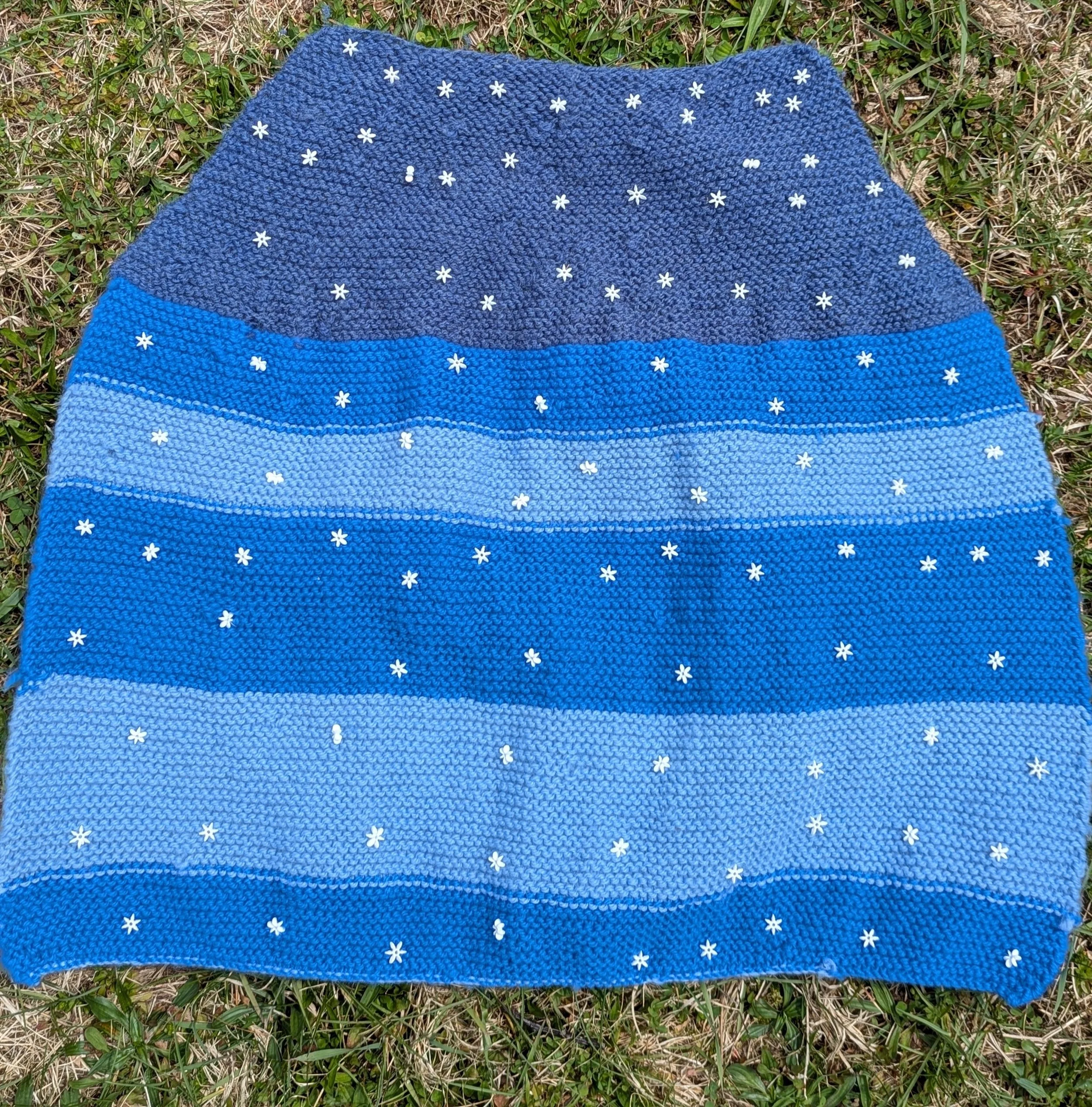
My artistic piece “A Warming Winter” shows the decreasing amount of total snowfall and days of snow over the past 10 years at whiteface mountain (Figures 1 & 2). Decreasing snowfall at Whiteface would lead to more usage of snowmakers, which take water from the surrounding area. Whiteface is allotted up to 100,000 gallons of water daily. Snowmakers at Whiteface use the product SnowMax. This product is made from proteins from the bacterium Pseudomonas syringae, which enables snow production at up to -3 ℃ instead of temperature less than -7 ℃. These proteins can “attack” plants and trigger them to freeze at a higher temperature of -1.8℃ rather than a normal range of -4-12℃. Excess water used for snowmaking results in a decrease in soil pH, which affects nitrification rates and biological communities inhabiting the soil. This means that every future winter when the snowfall decreases Whiteface will be forced to use more SnowMax on the surroundings and further change the hydrology for the surrounding area.
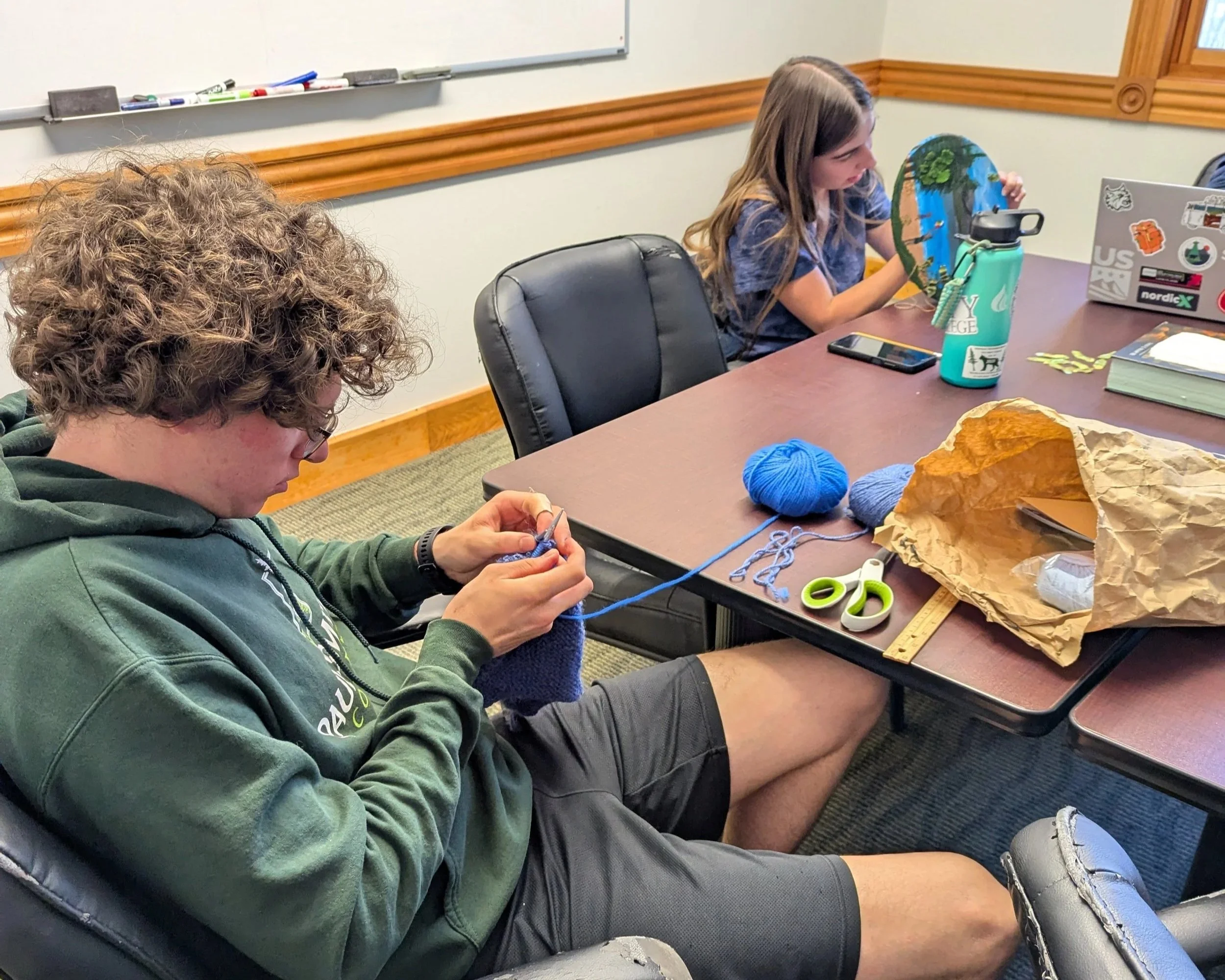
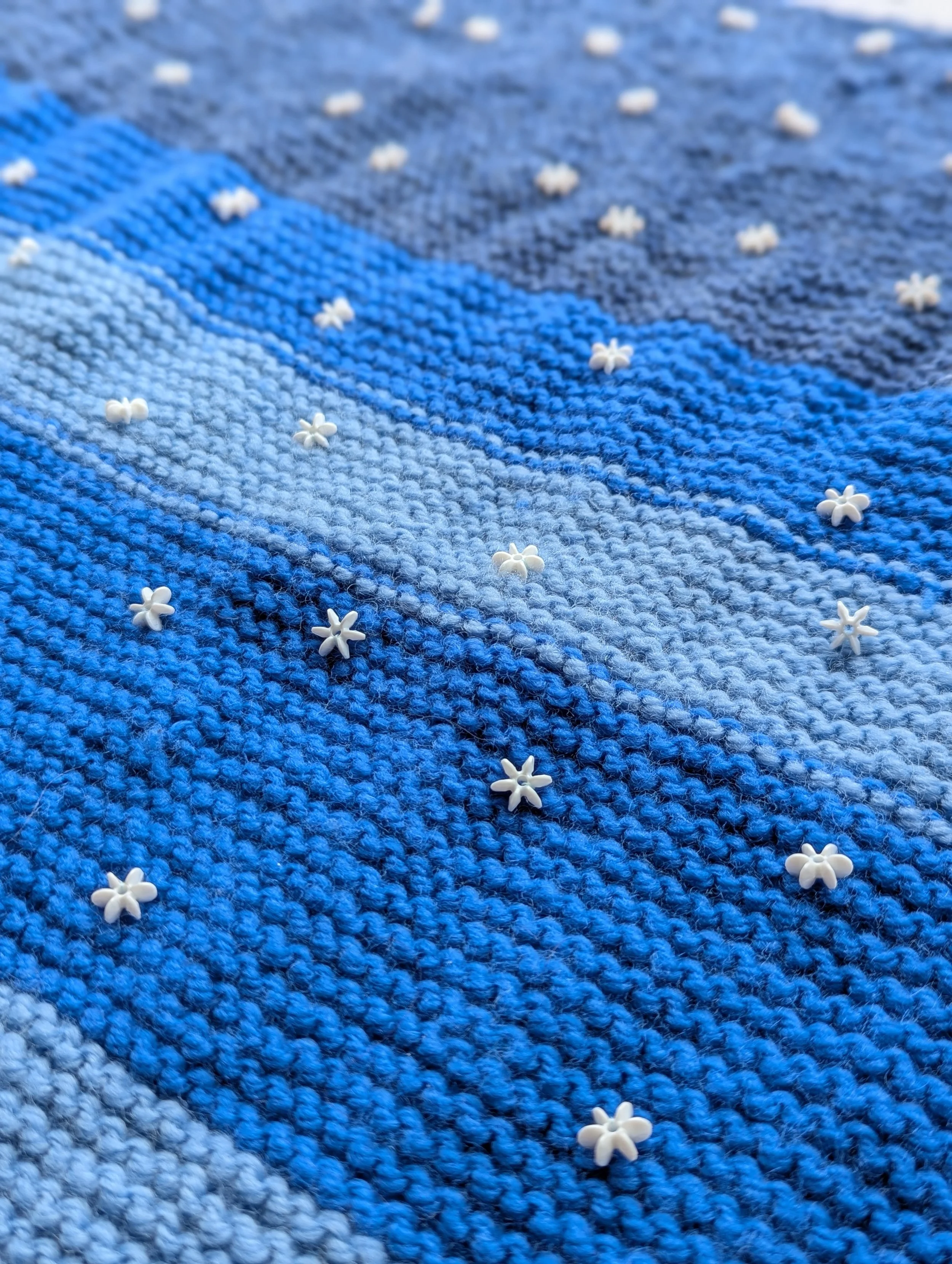
The artwork that I created displays both the yearly total snowfall and the total days that snow fell on Whiteface. These data points I knitted into a fabric canvas using three distinct colors of wool (total yearly snowfall) and little plastic snowflakes (Days of snowfall). The data that the colors represent are as follows, navy blue: >181’, blue 151-180’, and light blue <150’. The snowflakes each represent 5 days of snowfall. My artwork clearly represents the data; observers can see that the snowfall and snowy days have been decreasing over time. If one looks closely, you can see that where the cast off is made, a light blue color is used, signifying that future projections predict that winters will shorten and that there will be less winter precipitation.
I hope that everyone who sees this art project will realize that our winters are fading, and that policies and decisions made over the last half century have caused the planet to warm at an unnaturally fast rate. Knowing this I hope people will take this into mind and help protect the environment.
Sources
French, T. (2023, January 9). Equipped for snowmaking. Adirondack Explorer. https://www.adirondackexplorer.org/recreation/snow-sports/whiteface-snowmaking/
Morin, S., François, H., Réveillet, M., Sauquet, E., Crochemore, L., Branger, F., Leblois, É., & Dumont, M. (2023). Simulated hydrological effects of grooming and snowmaking in a ski resort on the local water balance. Hydrology and Earth System Sciences, 27(23), 4257–4277. https://doi.org/10.5194/hess-27-4257-2023
OnTheSnow. (2016). Whiteface Mountain Resort Historical Snowfall. Onthesnow.com; OnTheSnow. https://www.onthesnow.com/new-york/whiteface-mountain-resort/historical-snowfall
Wang, Y. (2017). The impact of snowmaking at ski resorts on the local ecosystem. Crested Butte, 72.