
Ian Gillman
During summer, millions of people visit Lake Champlain to swim, boat, and participate in various recreational activities. This beautiful freshwater lake provides natural habitat, recreational opportunities, economic benefits, and drinking water for hundreds of communities. Yet, beneath the lake's surface lies a serious environmental threat to the health of all its inhabitants.
Have you ever noticed bright green patches or signs of warning at the shores? They are all related to one environmental problem, which are harmful algal blooms (HABs). While algae are a normal part of ecosystems, excessive growth can lead to several health-related issues. There is no doubt that one of the reasons for harmful algal blooms is the excessive use of fertilizer.
People apply various fertilizers to maintain healthy looking green lawns and crops every year. As a result, the excess nutrients (phosphorus and nitrogen) are carried through precipitation to the nearest water bodies. Consequently, high nutrient levels cause rapid reproduction of algae in the same way as fertilizer makes grass grow.
My project examines the connection between phosphorus pollution and harmful algal blooms. Moreover, I show how visual art can be used to inform the public about environmental issues.
The Science
To fully comprehend the HAB phenomenon, we need to start with nutrient pollution. Phosphorus is considered the limiting nutrient in many freshwater ecosystems. Therefore, algae growth is usually limited by the amount of available phosphorus in the water. If the phosphorus concentration becomes higher, then the algae begin multiplying at an increased rate, covering the water surface with a bloom. Algal blooms typically occur in conditions of warm water, sunlight, and nutrient-rich waters. Uncontrolled algae growth causes many environmental problems. A dense layer of algae on the surface blocks the sunlight reaching native aquatic plants. These plants require sunlight for photosynthesis. Consequently, the death of aquatic plants leads to destruction of lake ecosystems and the disappearance of habitat for various fish and organisms.
Another critical stage happens once algae start dying. They become food for bacteria that consume large amounts of dissolved oxygen. This can severely harm all living creatures that depend on the presence of oxygen. Some areas become known as dead zones because of this effect. All aquatic animals suffocate because there is no oxygen left. Such processes might negatively affect whole food chains inside the ecosystem.
In addition, some algae release toxic substances that can irritate skin, affect pets, and poison drinking water. During severe algal blooms, beaches are often closed because of health risks associated with them.
Research and Data Collection
First, I decided to collect scientific evidence for my hypothesis and examine the correlation between harmful algal blooms and phosphorus pollution using environmental monitoring data. For this I used the phosphorus concentrations in water collected by the Vermont Department of Environmental Conservation monitoring program for Lake Champlain.
The following resources were used:
• Vermont Lake Champlain Monitoring Database
• Lake Champlain Long-Term Monitoring Program
Since HABs tend to occur in the summer, I examined phosphorus levels measured during July and August. Phosphorus concentrations in these periods of time are rather high due to warm temperatures and precipitation.
From Science to Visual Art
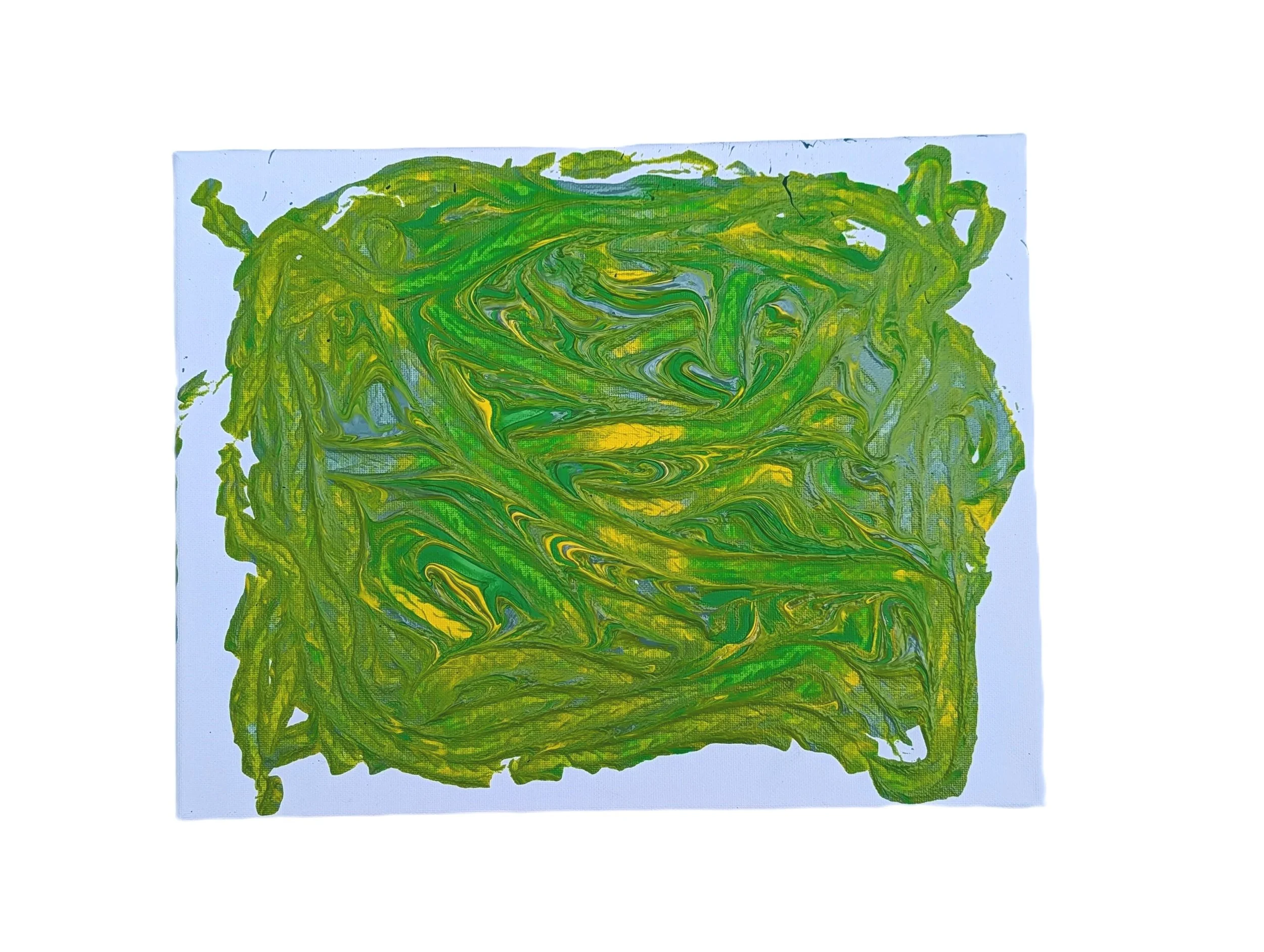
Now, let’s move to the artistic side of my project and visualize the transformation of lake ecosystem under harmful algal blooms. For this purpose, I have designed an artwork that would show the influence of human activities on the condition of lakes and waterways.
First, I decided to use shades of blue, green, and yellow to emphasize the changes taking place in the lake ecosystem. Natural colors (blue) are used to represent healthy state of waters, whereas green and yellow represents algal bloom covering the water surface.
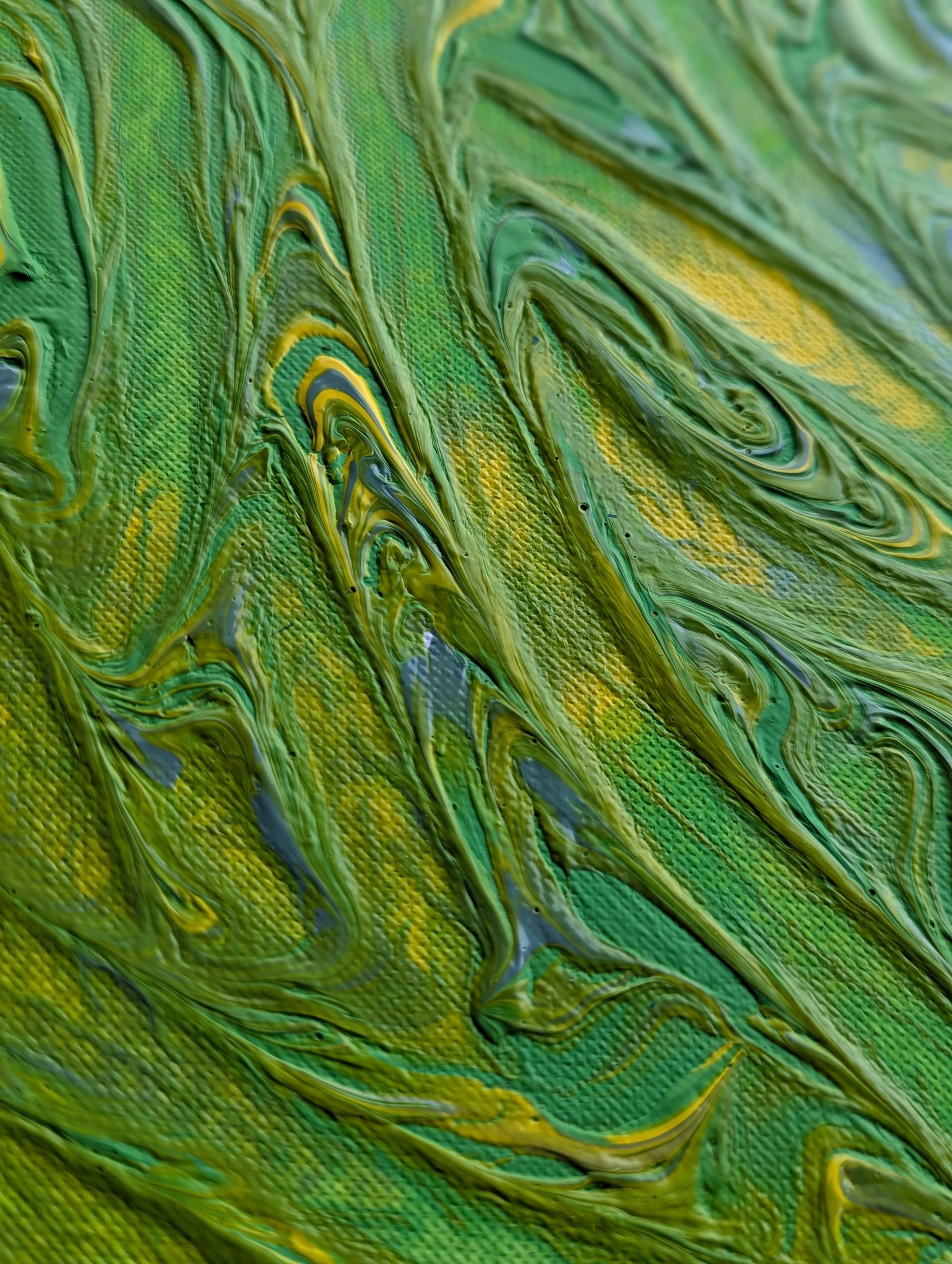
Texture is another important factor for my artworks. The rough texture is used to show environmental disturbance and was a natural result of using a golf ball as my paint brush. The reason for using the golf ball was simple. Golf courses, along with farms and others using fertilizers are the main human factors increasing HABs in Lake Champlain. Secondly, it was a form of art that is uncommon or unheard of by most. Lastly, the design rolling the golf ball made on the canvas struck me as like the photos of HABs in the lake I saw in my research.
Significance
While scientists are working to reduce the extent of algal blooms, all people who rely on lakes should realize the significance of the matter. Climate change increases the risks of excessive warming and more frequent rainfall. As a result, HABs will become even more common in the future. Luckily, the problem can be solved.
Here are some actions that will help to decrease HABs:
Reduction of fertilizer usage
Use of buffer vegetation near waterways
Maintaining sustainable agricultural practices
Proper waste disposal
Everyday activities can significantly affect our environment. My project is intended to educate people about this phenomenon and draw attention to the fact that science can be applied to everyday life. Through the combination of science and art, people may get interested in scientific questions and start thinking about their own contributions to the pollution of the environment. Next time someone sees the green water around shores they will realize that there is something going wrong and take responsibility for this situation.