
Sadie Mills
Great Northern Diver, Spirit of the North, Canadian Wolf Bird- Each one of these nicknames and more have been awarded to one iconic waterbird that calls the Adirondacks its home. For hundreds of years, loons have found their way into the art and culture of every community that encounters them. Their striking black and white marks, beady red eyes, and haunting call make them an unmistakable symbol of northern living and a bird that everyone around is proud to share a home range with. Yet despite their icon status and indestructible glare, loons face a quiet and preventable threat beneath the surface. Each year discarded lead fishing tackle lost in Adirondack lakes poison the very birds that have come to symbolize wilderness itself. Mistaking lead jigs and sinkers for pebbles, which loons ingest to aid in digestion, loons take in the deadly metal and quickly succumb to lead toxicosis. As a result, these tiny pieces of fishing tackle, carelessly discarded or snagged, have emerged as the leading cause of loon mortality over boats, guns and parasites. This project highlights the effects of lead poisoning and the astonishing role it has played in loon deaths.
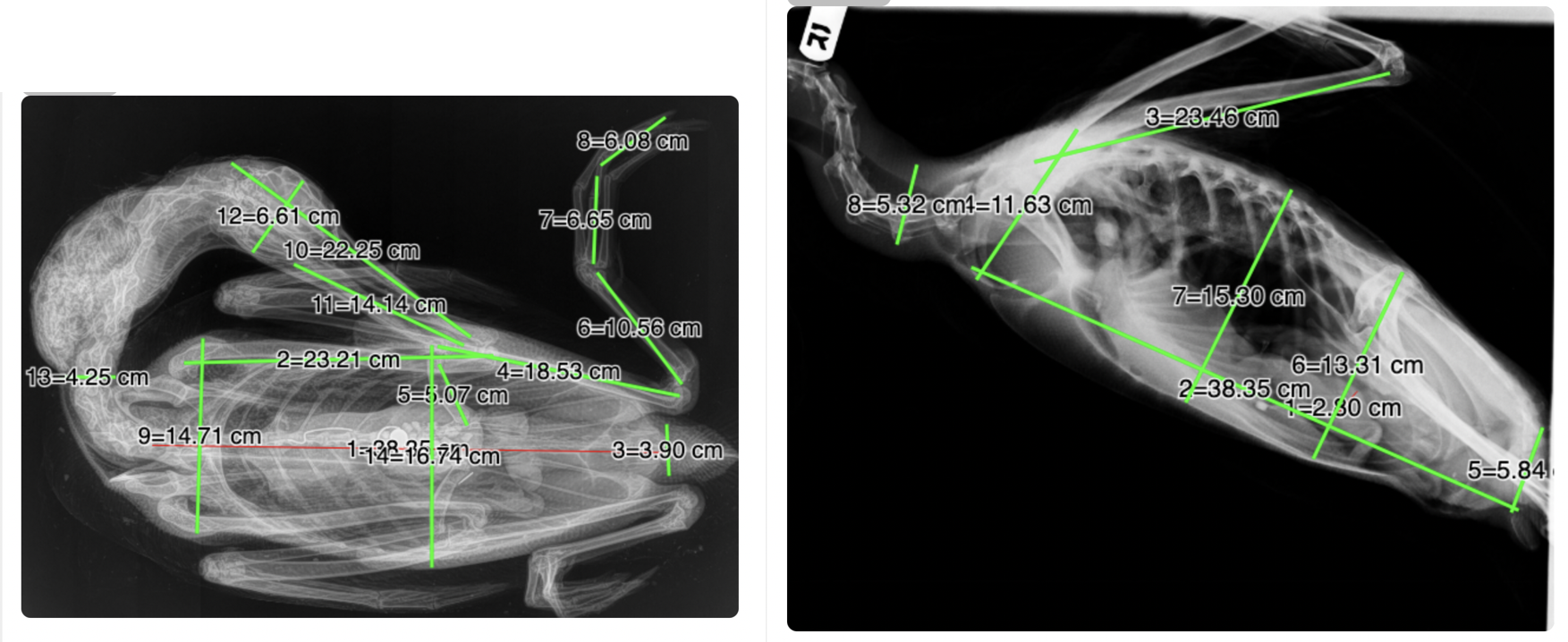
Data used for the project was collected from the Loon Preservation Committee and various loon mortality studies in and around New England from 1989-2024 (view an article from the LPC here). I also had the amazing opportunity to meet with Mark Pokras, a researcher on many of the articles I referenced, to talk about loon anatomy. For this project, I wanted to undertake a challenge by depicting a loon entirely to scale, and I couldn't have done that without Mark's teachings and advice.
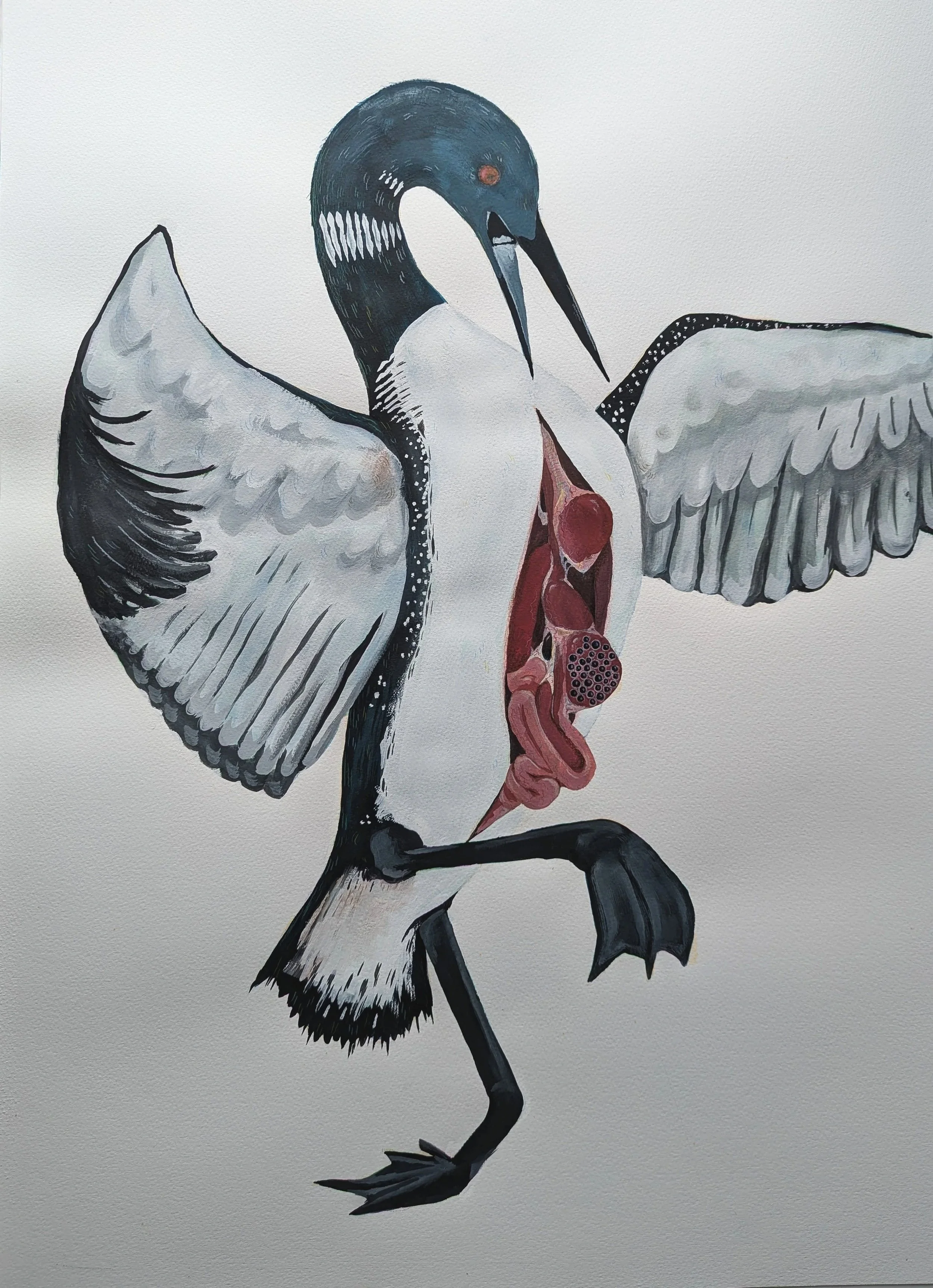
This piece depicts a loon with 37 lead sinkers in its gizzard, representing 37% of loon mortalities caused by lead poisoning. The second half of a two-part stomach system, the gizzard is where much of the loon's digestion takes place, and also usually the final resting place of any lead it ingests. This imagery reflects findings from real x-rays and necropsies, where ingested lead tackle accumulates in the gizzard and appears clustered like a sack of marbles.
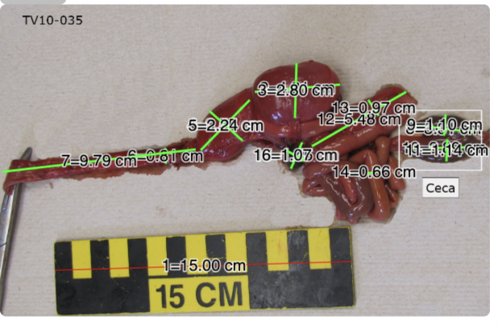
I created this piece using gouache paint and colored pencil on watercolor paper. I felt it was important to make the painting at a true-to-life scale because loons are such large, commanding birds in person. Presenting the bird at its full size helps emphasize both its physical presence and the weight of the threat it faces, creating a stronger emotional impact. Though finding information on the scale of a loon and its GI tract presented its challenges, I combined expert advice with digital measuring technology to ultimately gain an accurate picture of the true size of one of these birds.
Through this work, I hope viewers can gain a deeper appreciation not only for the beauty of loons, but also the fragility hidden beneath their strength. Lead poisoning is an issue that is both devastating and preventable, and awareness and change in human behavior is important for overcoming it. By bringing the effects of lead tackle onto my canvas, I hope I can encourage greater care for this wildlife that so deeply defines the Adirondacks.
Sources
Lead Toxicosis from Ingested Fishing Sinkers in Adult Common Loons (Gavia immer) in New England
Population-level effects of lead fishing tackle on common loons
Special thanks to Mark Pokras for mentoring me on all things loon anatomy, Michale Glennon for making this project possible, and the Lake Champlain Basin Program for its generous funding.