Delaney Curley
During my time at Paul Smith’s College, I have joined a culture of water-related recreation, whether it be a kayaking excursion in late September before it’s too cold to get on the water, a sunset over Lower St. Regis on the point, traffic in town for the annual Adirondack Canoe Classic 90-Miler, or a celebratory freezing dip off the dock after my last final of the spring semester. Water is a huge recreational resource in this area, which is why highlighting the potential for human health concerns related to harmful algal blooms in the Adirondacks is so important. The issue I am addressing with my work is Harmful Algal Blooms, or “HABs” for short. HABs can be toxic to humans and pet companions upon exposure in recreational water bodies, so much so that the Vermont Department of Health posts an annual map of where these blooms occur on various lakes and ponds across the state. The aim of the tracker is to inform recreational users of when and where these toxic bacterial blooms occur.
The Science
The formation of harmful algal blooms is driven by nutrient pollution, mainly in the form of excess nitrogen and phosphorus. The primary sources for these nutrients entering waterways are runoff from agricultural land in the form of manure and other fertilizers, wastewater and septic systems, urban stormwater, and the nutrients stored in sediment when land erodes. The HABs themselves are accumulations of cyanobacteria, otherwise known as blue-green algae. Blue-green algae is a common bacteria found in waterbodies and is only harmful in large quantities, like in the case of harmful algal blooms. These conditions occur when nitrogen and phosphorus combine with the warm days of late-summer and early fall, making the water appear dark green.
Coming into contact with harmful algal blooms can result in skin irritation and rashes, and ingesting water can cause stomach problems, liver damage, numbness and dizziness, according to the Vermont Department of Health. The main takeaway from the science is that HABs pose a health risk to all who enjoy water recreation, and these blooms are directly caused by humans. While cyanobacteria naturally occur in water, human activities have created this toxic water issue.
Data Sources
The data for my project came from Vermont Department of Health’s Cyanobacteria Tracker. This map is a collaborative effort between Vermont Department of Health and the Lake Champlain Committee. Trained volunteers and the public report HAB locations on this website, and the department of health verifies the sightings. I filtered the data spreadsheet to show me the dates of “High Risk” HAB reports on Lake Champlain for the year 2025.
My Artwork
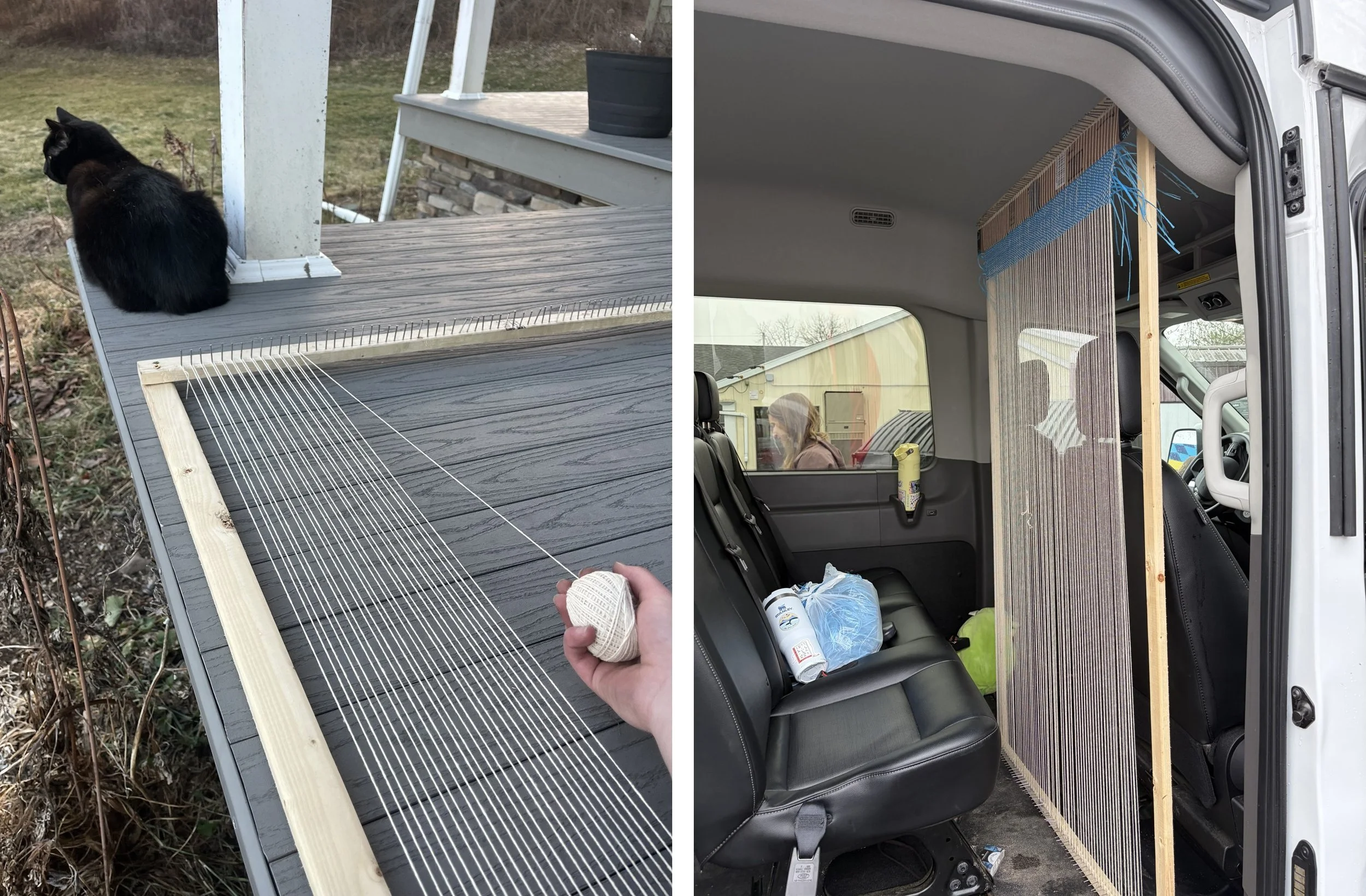
My artwork is a demonstration of not only meaningful science communication but also finding your niche. On the first day of class, we all shared our preferred artistic mediums, as we all probably joined this class because of our shared love for both art and science. I, however, joined the class for the opposite reason; I had little experience with art, and certainly no preferred medium. I find it relevant to note that I am not an artistic person, so the idea of a final art project was somewhat intimidating to me. In the process of brainstorming my final project over spring break, I asked myself what I’m good at, and after returning to my farm hand duties for the week, settled on handy work. That’s where I got the idea: a woven tapestry of recycled bailer twine from hay bales we have fed the cows on my family’s dairy farm over the winter. I ran with that idea, coming up with the “rug” by relying on my ability to work with wood, tie knots, and problem solve as I have all my life on the farm. We usually just burn the strings from hay bales, saving a few for quick fence or equipment fixes, but I started collecting bags of them to start my project. I then headed to the store for wood to build the loom that my tapestry was created on, as I wanted the piece to have specific dimensions. While I may not be the best “artist” in the sense of drawing pretty pictures, I can drive nails into wood and create something meaningful with twine that may or may not have had some cow manure on it.
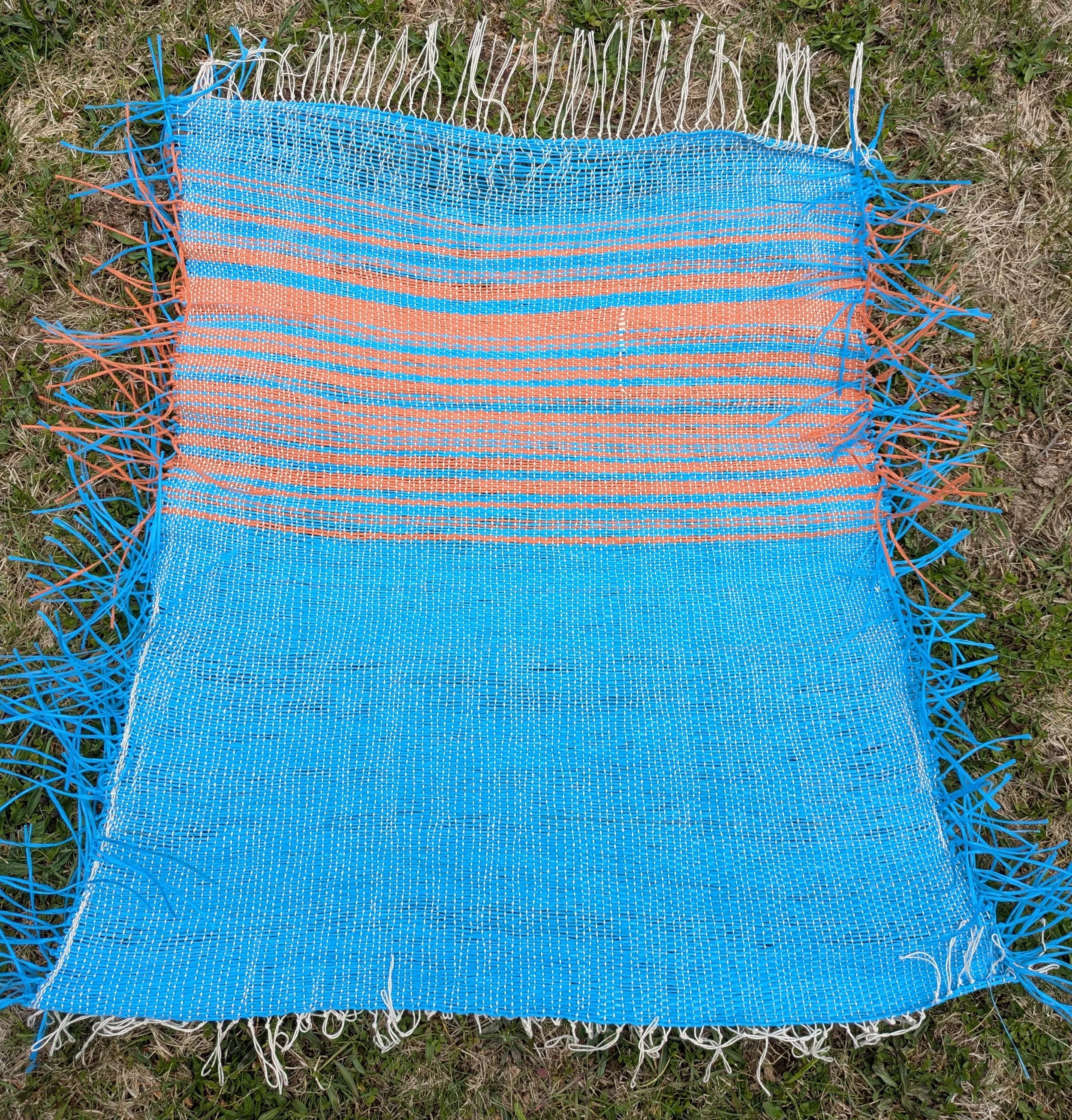
The tapestry is a combination of blue and orange twines, with both colors representing a different cyanobacteria level, or HAB risk on the waters of Lake Champlain. Each line in the tapestry represents one day of 2025, with the blue showing days with no blooms observed on Champlain, and orange representing the “High Risk” days where a lot of cyanobacteria was observed on the water.
The scientific topic of harmful algal blooms had stuck out to me all semester, as I felt it was the water issue that I had the greatest attachment to. As stated previously, HABs are often a result of agricultural runoff, a topic that is directly relevant to my way of life. Ag is a traditional field, with sometimes very little deviation from how operations have been performed for years and years. Having gone to college for a natural resource related field, I’ve learned so much about how the way of life I’ve grown up with can impact the ecosystems around farmland. I made the choice to represent the prevalence and timing of harmful algal blooms on Lake Champlain using bailer twine specifically to highlight the connection between water quality and agriculture.
Conclusion
The goal takeaway from my project should be the visual representation of the time of year, and of course the frequency that harmful algal blooms are likely to occur due to human pollution, and the implications that this can have for those that use Lake Champlain recreationally. I hope this project brings light to the causes of these blooms and encourages people to think differently about how pollution can degrade the waterways we care so deeply about in the Adirondacks.