By Dolcie Tanguay, Seasonal Field Technician at the Adirondack Watershed Institute
As we close out a busy field season at the Paul Smith's College Adirondack Watershed Institute (AWI), I am also wrapping up my first summer as a seasonal field technician working with AWI’s water quality monitoring team and am reflecting on my work traveling to dozens of sites around the Adirondack Park. My job was primarily to gather water samples at each site before relinquishing them to our lab crew to analyze conductivity, dissolved oxygen, dissolved metals, pH, nutrients, and chlorophyll, to name a few. That data is then incorporated into different reports that are distributed to lake associations and the public so that local community members can be informed of what’s going on in the water. Additionally, our data helps researchers at AWI and other institutions understand things like harmful algal blooms (HABs), the status of acid rain recovery, and road salt impacts in the park. In total, I was able to sample over 50 different sites spanning from the Moose River Plains to the High Peaks, and right out AWI’s back door.
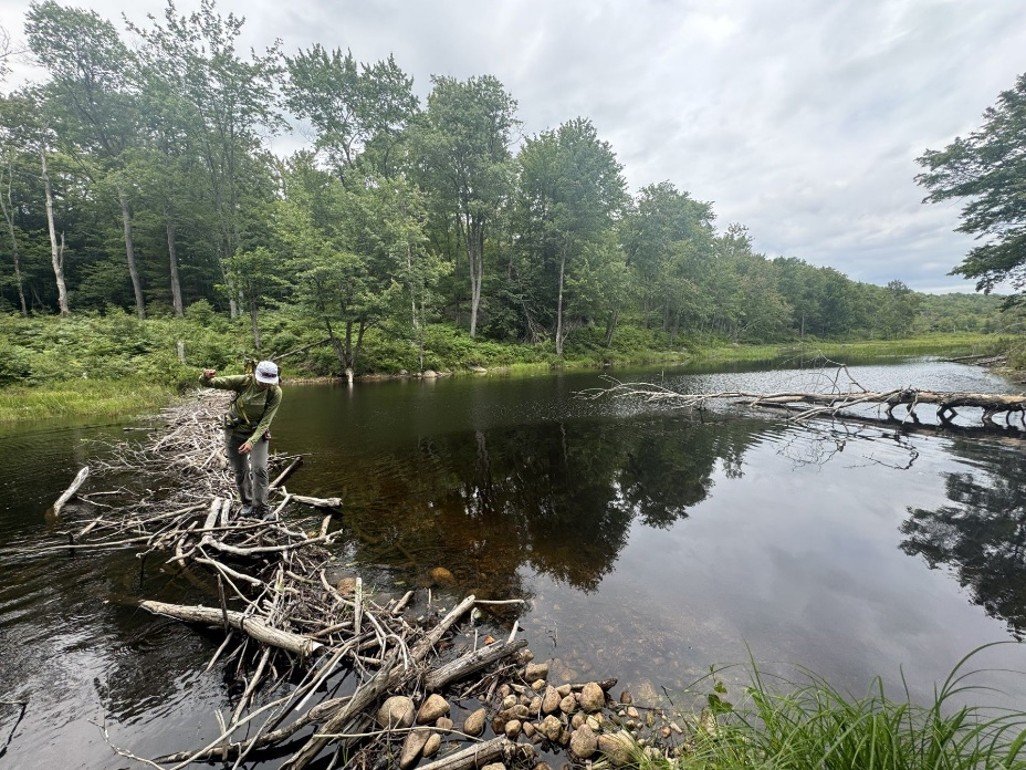
Walking across a beaver dam bridge in the Ha-de-ron-dah Wilderness
I enjoyed the flow of field work where we would have a few busy weeks in a row then a couple of quieter weeks to recover and focus on the more local sites. Many of our sites are accessible by canoe only and luckily for me, I greatly enjoy paddling. But, that’s not all we did to get to the more remote sites – we also did a lot of hiking, biking, motor boating, and even the occasional ATV ride. Some of the sites are a bit remote to say the least. Driving three hours on dirt roads followed by hiking for a few more added up to some particularly long and tiring days, but fun coworkers kept me feeling encouraged through it all.
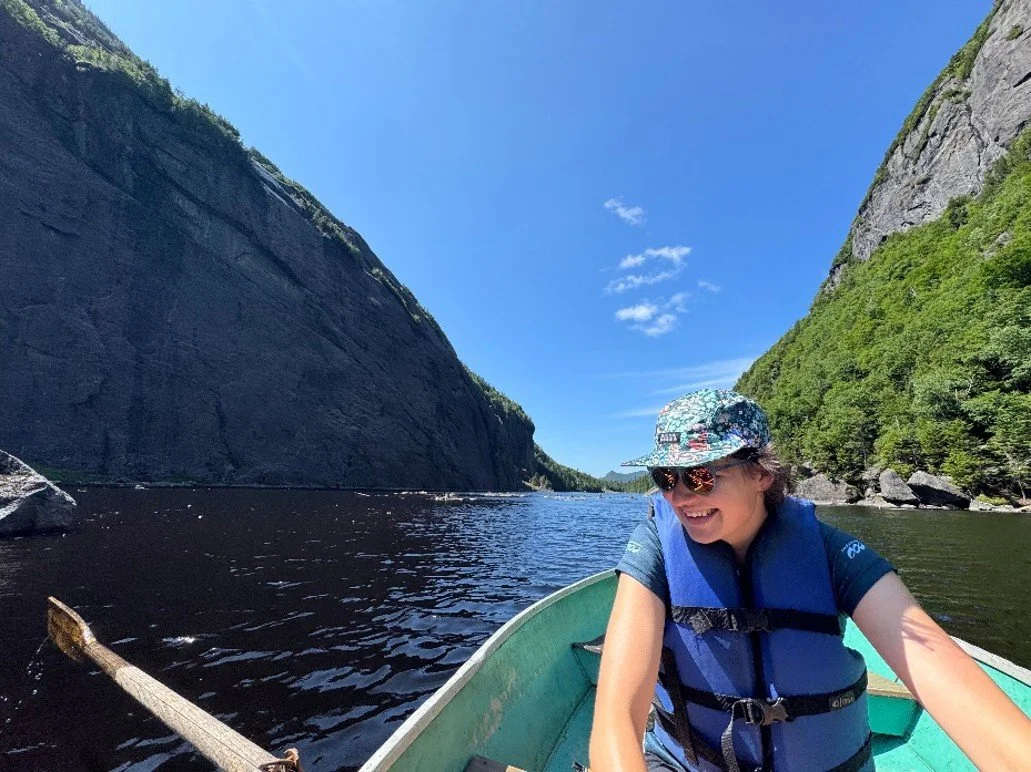
Rowing on Avalanche Lake
I have loved the Adirondacks since I first stepped foot on Paul Smith College’s campus as a student over six years ago, but becoming involved with AWI has somehow made me appreciate these landscapes even more. Some of my favorite sites were in the Fish Creek area, specifically Horseshoe Pond and Copperas Pond. Both sites required a bit of canoeing to get to, and we were always welcomed by loons, herons, and other wildlife during our visits. Other highlights include rowing on Avalanche Lake and Lake Colden, swimming in Queer Lake, and the occasional ice cream break. I feel extremely fortunate to have spent so much of my summer outside learning about limnology while exploring our beautiful park and learning more about the impact of AWI’s work as a whole. Whether that be through stewardship, educational outreach, lab work or field work, we all have a common goal and I was just one piece of the puzzle.
Cheers from a tired but happy field tech!