Adia Hermann
Have you ever gone to a lake that was choked with milfoil, so densely packed that you cannot see a couple feet below the surface? Or have you ever stood on the shoreline of a water body infested with water chestnut, the shoreline hiding the spiked nuts making it impossible to enjoy the water even from the shore. Invasive species have become a growing problem across the United States, with a wide variety of species taking over the waterways. Waterways infected with invasive species face many threats. These species upset the ecosystems that they invade, crowding out native species, creating monocultures, and eventually leading to dead zones. Beyond even this, they impede our own recreation and use of the waterways.
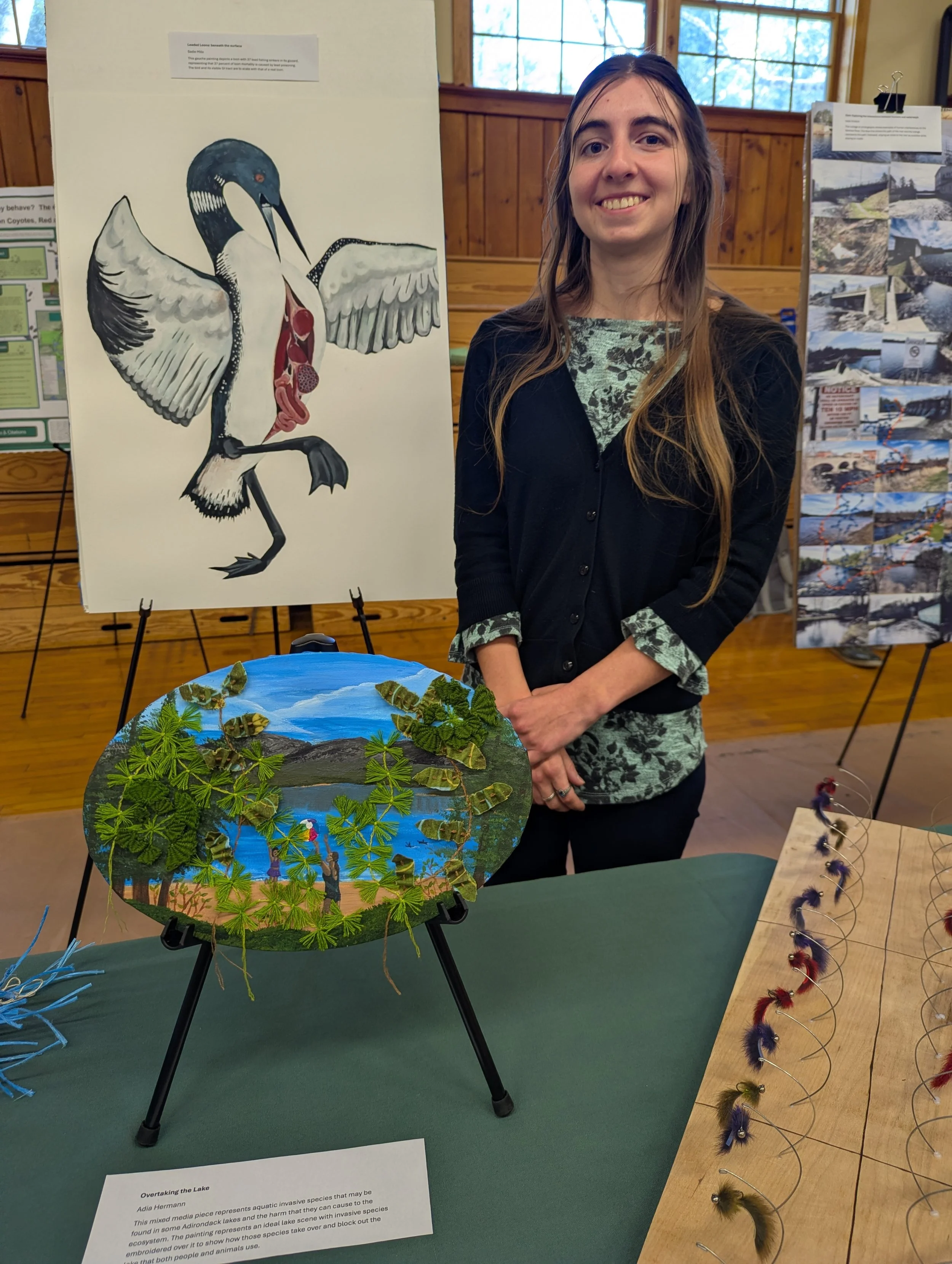
This piece was made to explore the impacts that invasive species can have on our waterways and on us. Specifically, I wanted to explore the aquatic invasive species in the Adirondack Park and in Lake Champlain. These species are of a large concern in the area due to the large impact that water recreation has on the area.
Monitoring efforts have revealed the extent of the invasion within the Adirodacks. Within just Lake Champlain there are over 50 invasive species that are impacting the lake. Thankfully, interior to the park, there are fewer, much of which is due to the careful surveillance that takes place. Even so, there are over ten species of invasive species that have managed to take root within the park. This information on the species within the park is what I used to inform the piece that I created.
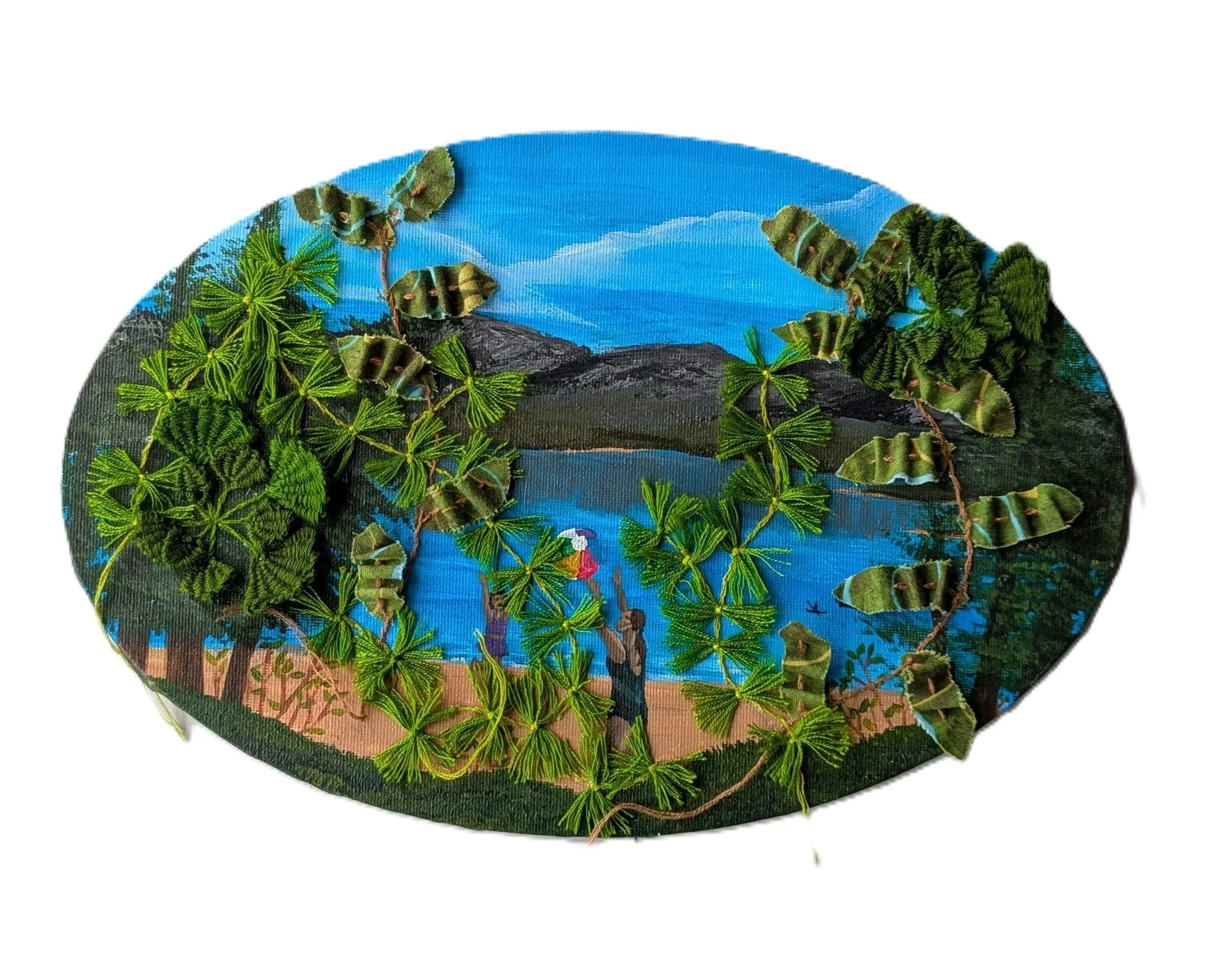
I wanted to make a piece that explored the impacts that invasive species have on not only the waterways, but also those who use them. To do this, I wanted the base of the piece to represent the joys, memories, and ways we can use the waterways. This was created with an acrylic painting of a lake landscape. I wanted to show an almost idyllic landscape. Sunny, bright, with a soft sand beach, the painting represents what many see when thinking of a perfect day at the lake. In the foreground you can see a family playing, enjoying the shore, while in the background two paddlers enjoy the lake from within kayaks. This piece was made using acrylic paints on a canvas, which let me add on top other details.
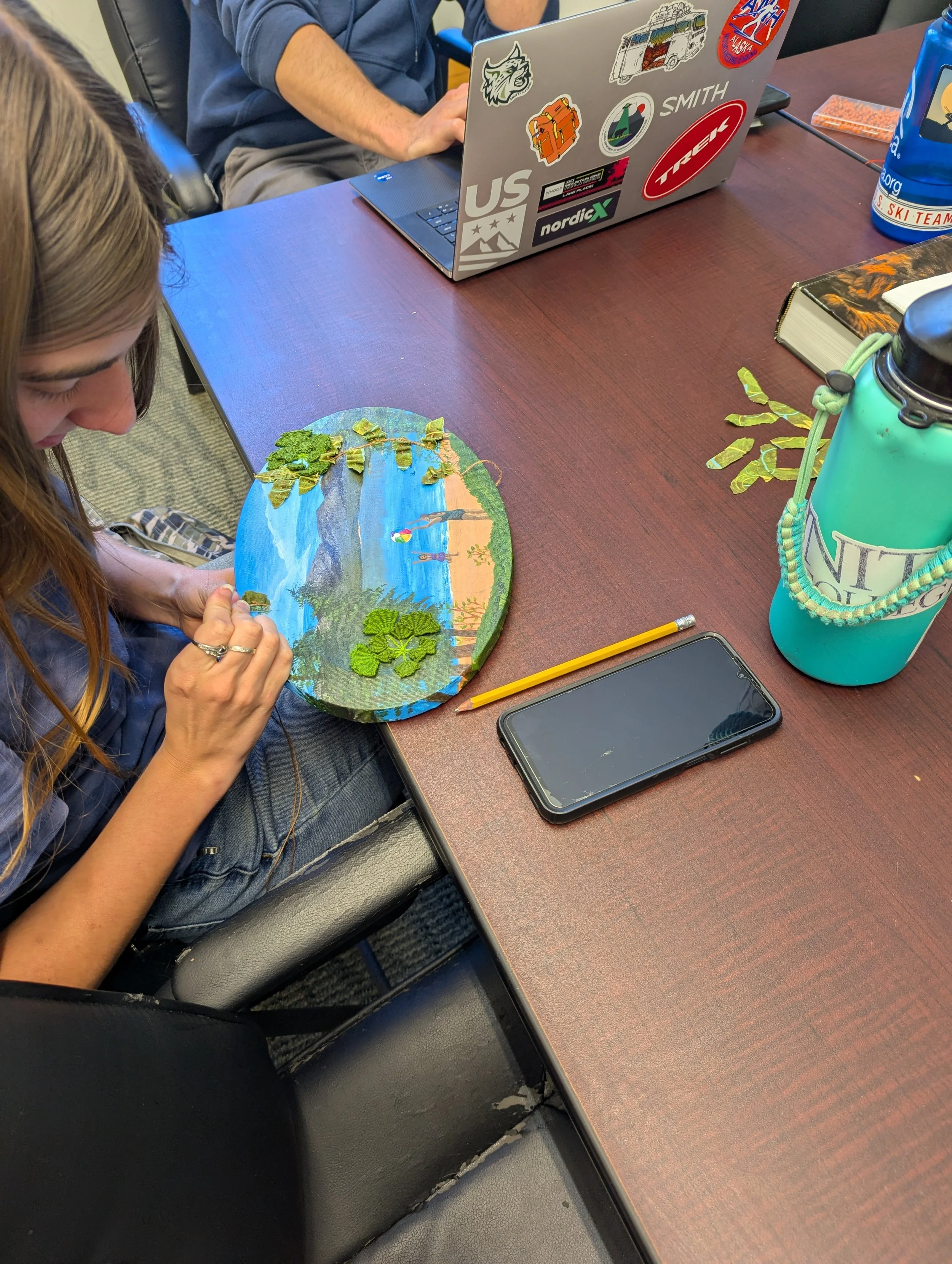
Those other details were the invasive plants I added to the landscape. Because the base of the piece is canvas it allowed me to add the plants on the top of the piece using embroidery. This allowed me to place them over the landscape, emphasizing the effect they have in taking over and blocking out the environment and the typical uses of the landscape. These were made to be three dimensional, which lets them stand out more in comparison to the flat background. The brighter colors of the plants also make them stand out even more when compared to the rest of the landscape. These plants were made using a modified woven picot stitch, modified stump work, and fabric leaves. The species shown were some of the most prevalent invaders, and all ones that have become well known for their invasive tendencies. Those were water chestnut, curly leaved pond weed, and Eurasian water milfoil.
Even the positioning of the plants on the landscape was specifically chosen. Most of them are crowding in from the outside, representing how many of these species come into landscapes from places outside of them. Slowly they creep in, eventually blocking out and crowding out the landscape. They also wove up between the family, cutting off their game and fun on the shoreline. This shows the species breaking up and blocking the fun that people can also have in aquatic landscapes.
With this piece, I hope to communicate the impacts that invasive species can have on the environment. The environmental impacts of invasive species are well known by many, and this information does move many to want to help lessen the impacts. However, not everyone is aware of the fact that they also have an impact on us as well. Reducing fisheries, creating dead zones, and worsening lake conditions are just a few of the impacts that invasive species can have on the people that enjoy the water. It is these impacts that I hoped to highlight, to help encourage people to help remedy this increasingly growing issue.
I would hope audiences would consider how their actions can either help alleviate or worsen the impacts of these species in lakes close to them. While they are out on the water or enjoying the benefits that the lakes bring to them, I hope they think back and consider how an invasive species in these waters would impact them. With these thoughts in mind, I would hope that they would do their best to try and alleviate the issue. This can be as small as making sure not to spread these species from lake to lake. Even just small actions taken by those who are aware can help prevent the may harms that invasive species can cause.