Winter on the Water
The Paul Smith’s College Adirondack Watershed Institute (AWI) has been collecting lake samples in support of the Adirondack Long Term Monitoring (ALTM) Program since February 2023 through a contract awarded by the New York State Energy Research & Development Authority (NYSERDA). This program was developed to evaluate the recovery of Adirondack lakes and streams from acid rain deposition that heavily affected the region in the 1970s and 1980s and involves partners across the Adirondack region and New York State. Through the ALTM Program, AWI samples 58 sites across the Adirondack Park, 15 of them annually in July and the other 43 during five months of the year: February, April, May, July, and September. Though most of AWI’s fieldwork happens during open water months, ALTM sampling makes for a busy and exciting February for our field team.
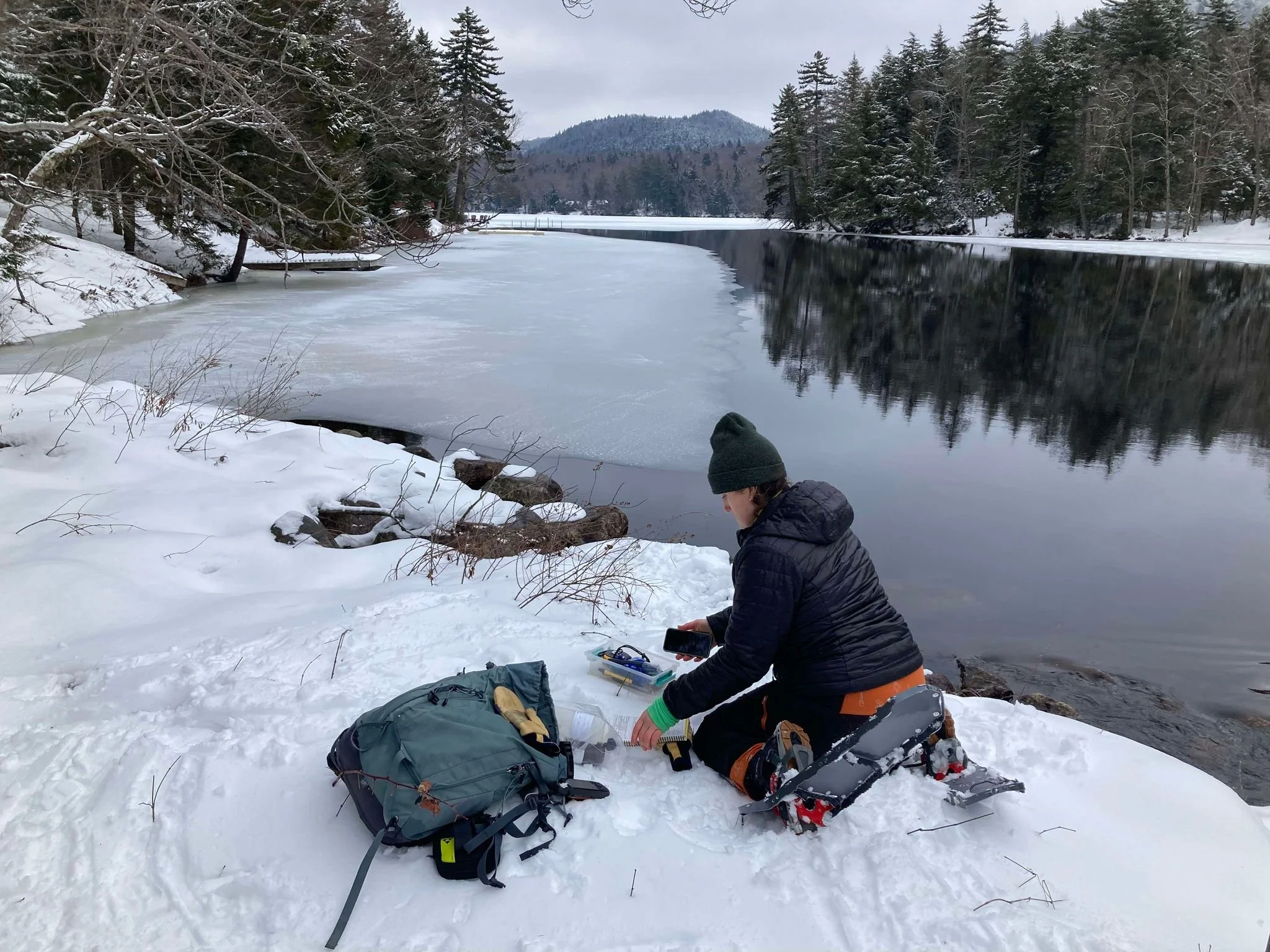
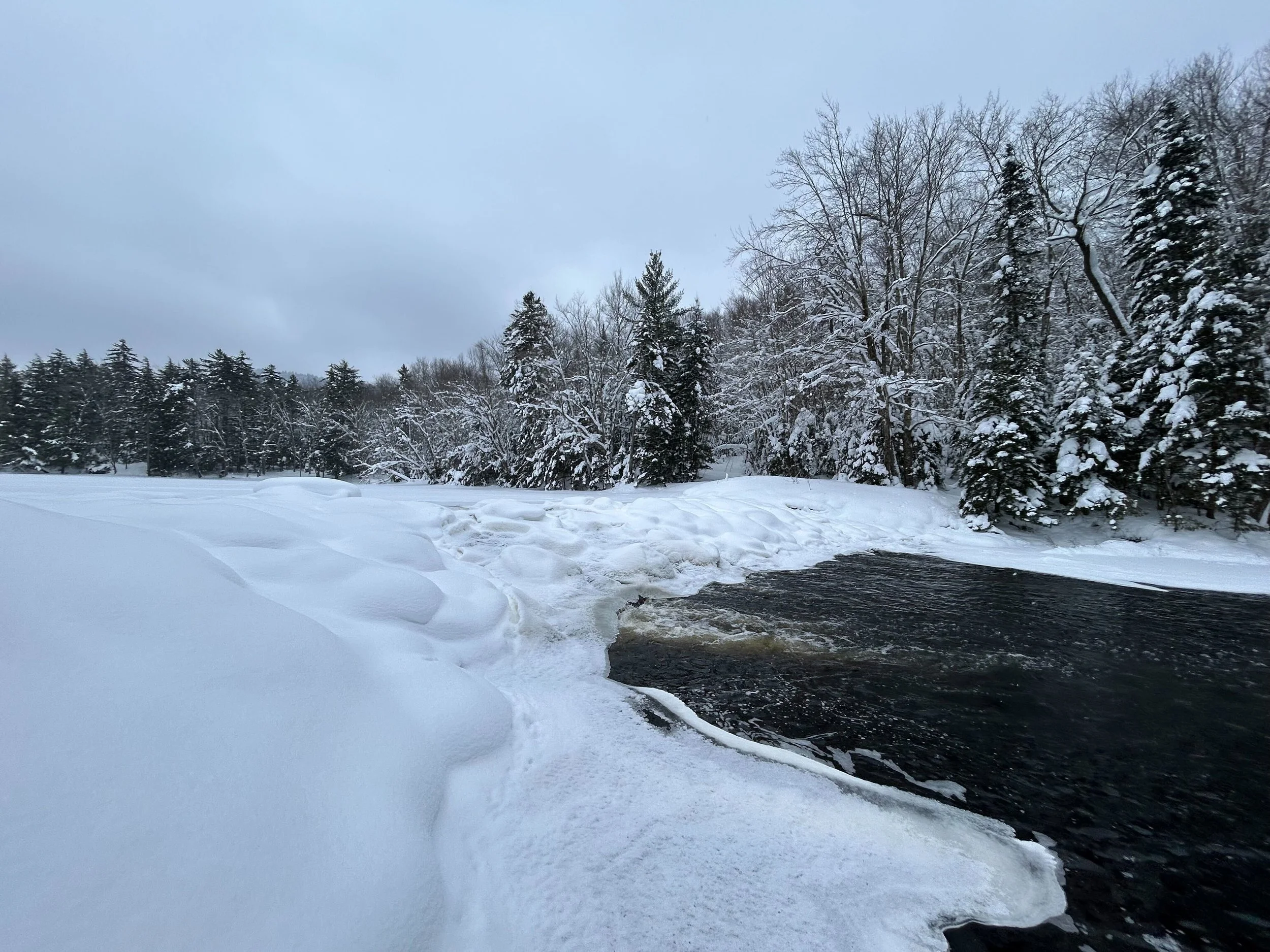
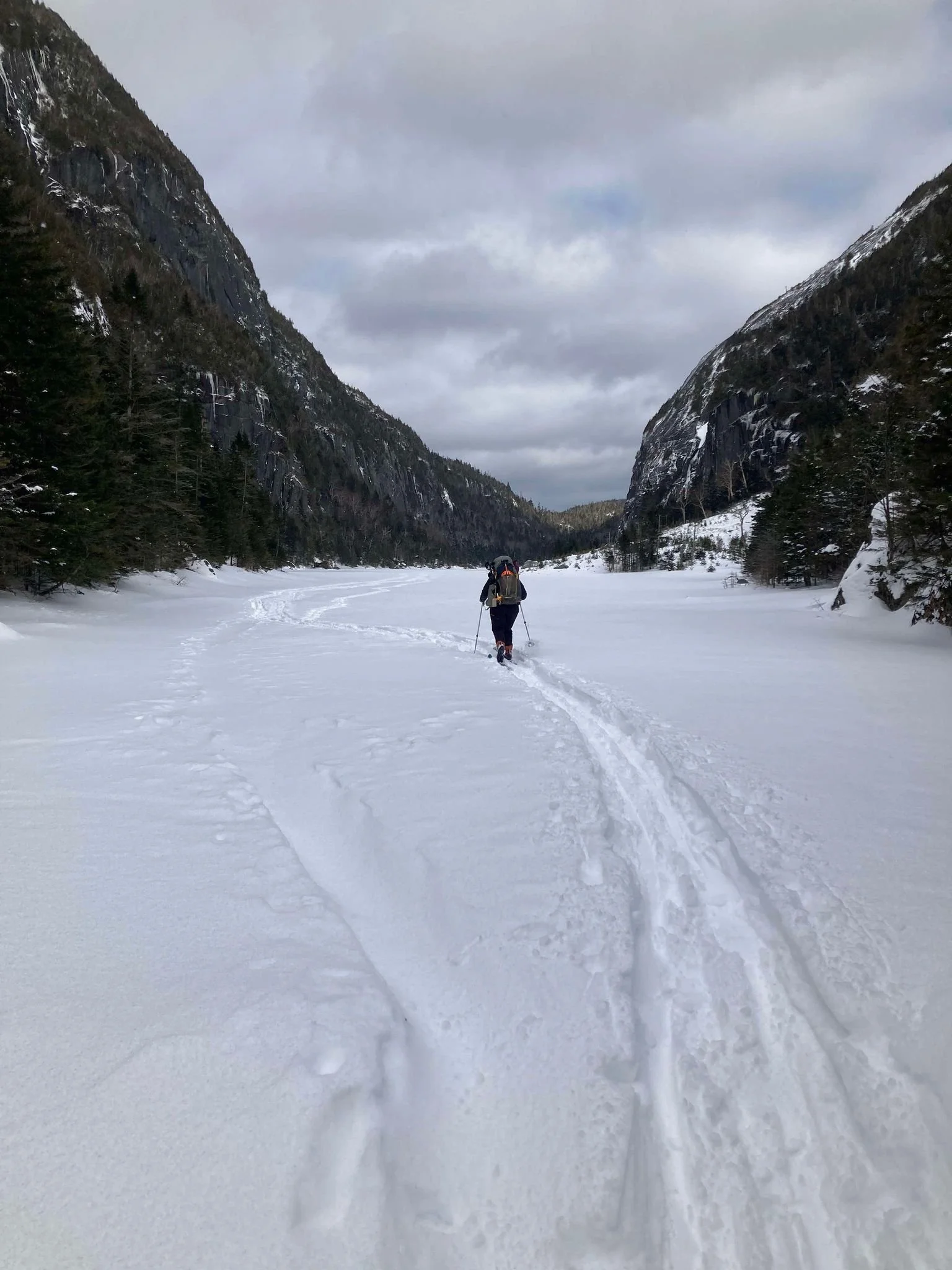
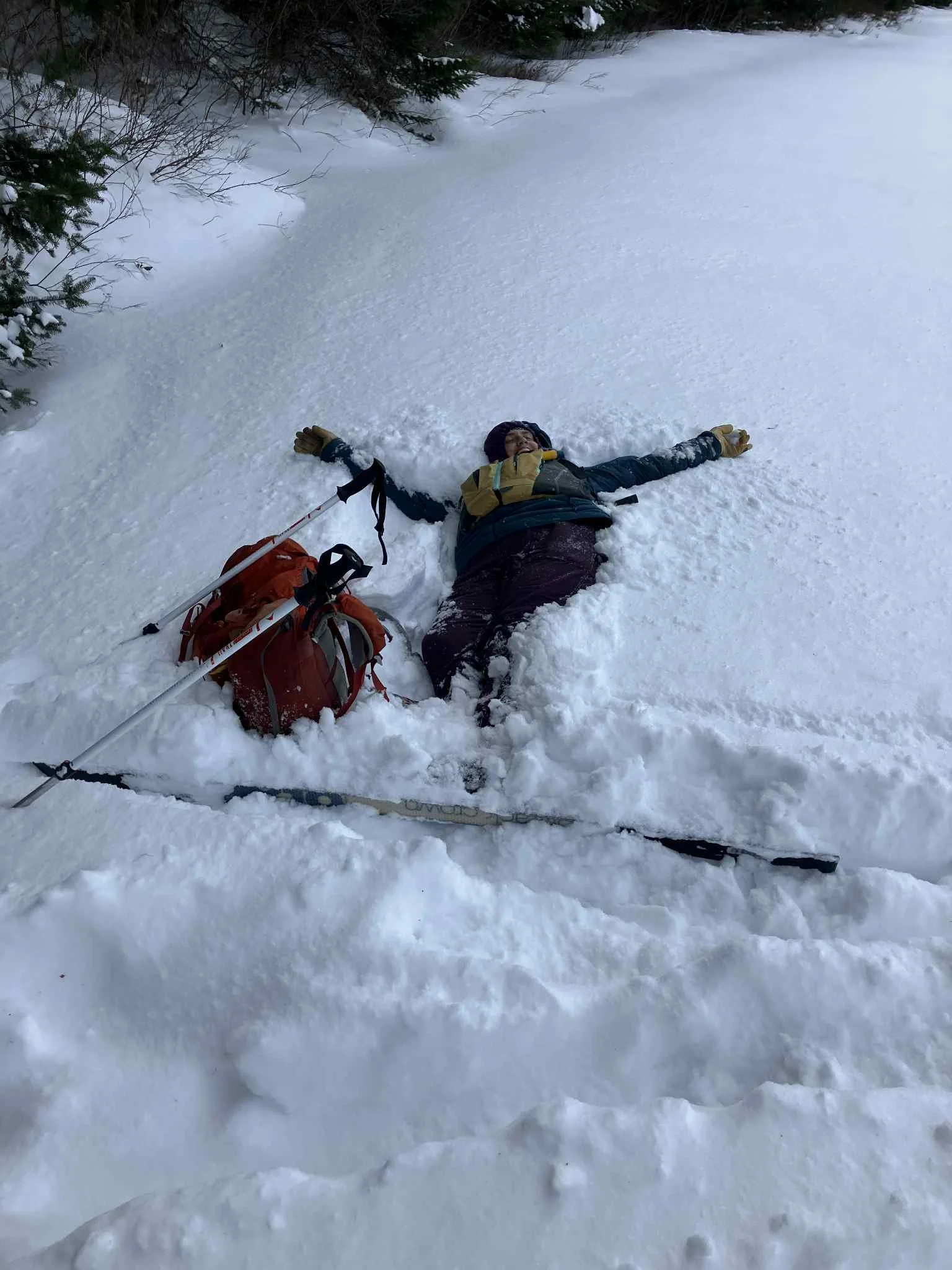
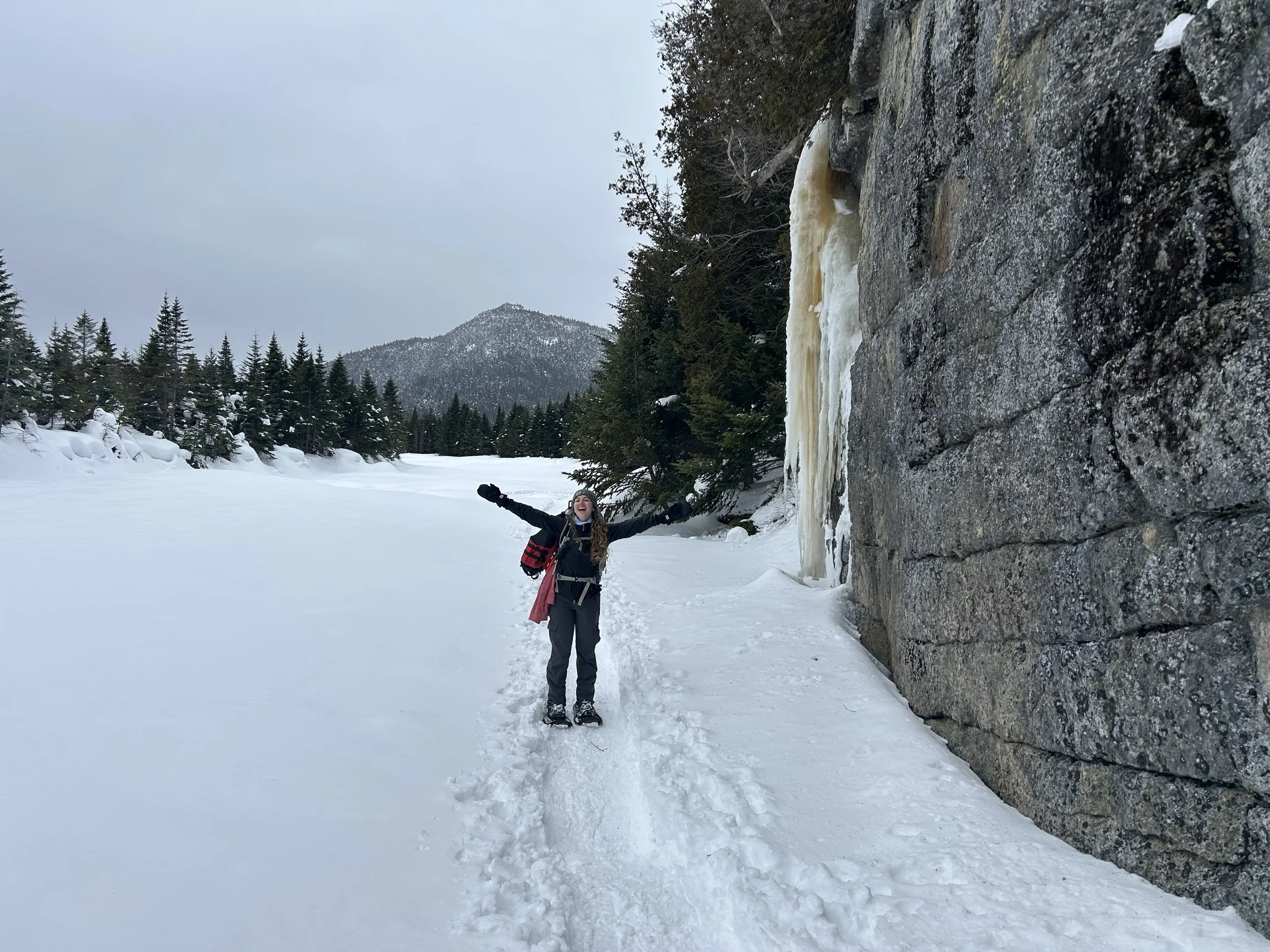
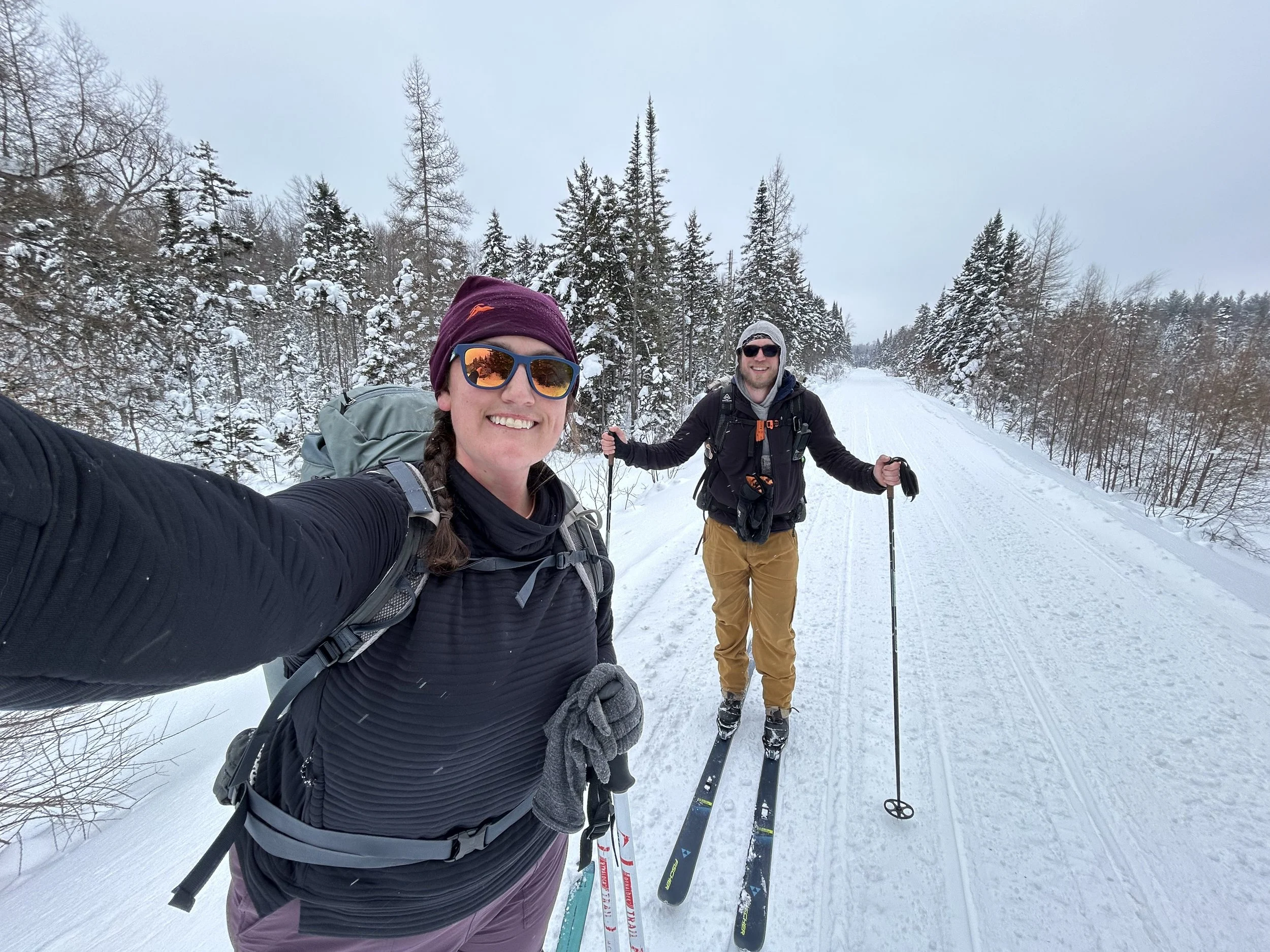
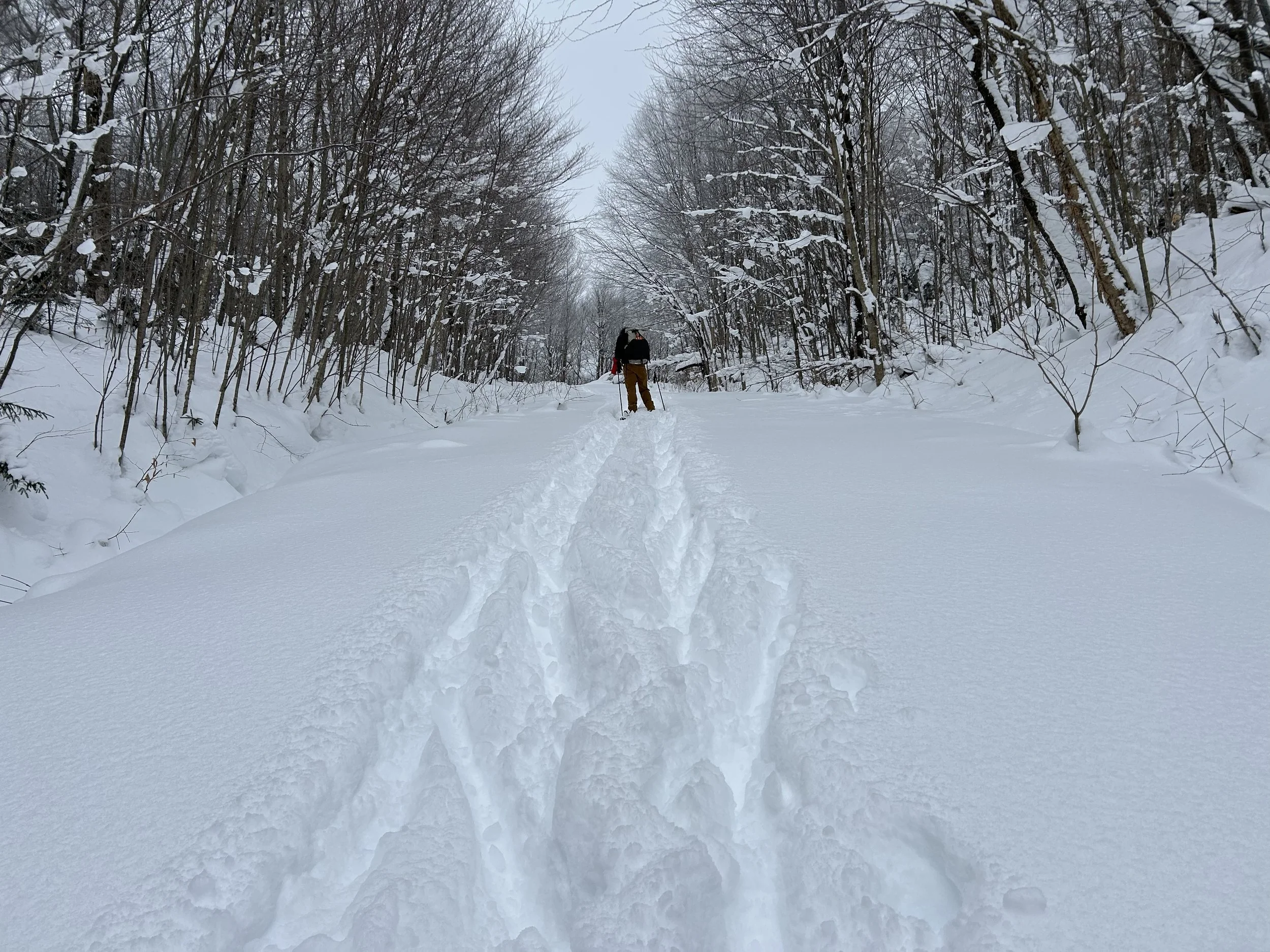
Winter fieldwork presents both unique challenges and adventure. In recent years, Adirondack winters have provided the full spectrum of conditions, making planning and execution of site visits difficult at times. Due to seasonal road closures and the remoteness of certain locations, some sites are inaccessible altogether, and others necessitate the use of a snowmobile. In some rare cases, conditions align where ice skating to the sampling site is possible and a special treat. The rest vary between pleasant bluebird days of skiing or snowshoeing and slogs through deep, unbroken snow, sometimes with howling winds and whiteout conditions. Some sites involve venturing out onto frozen lakes to collect water samples from the deepest point of the water body (deep hole), requiring additional safety equipment and on-site assessment. Adding to the challenge is that many of these locations see fewer recreators this time of the year, and some require bushwhacking, often meaning sinking up to your knees or deeper with each step, even with snowshoes on.
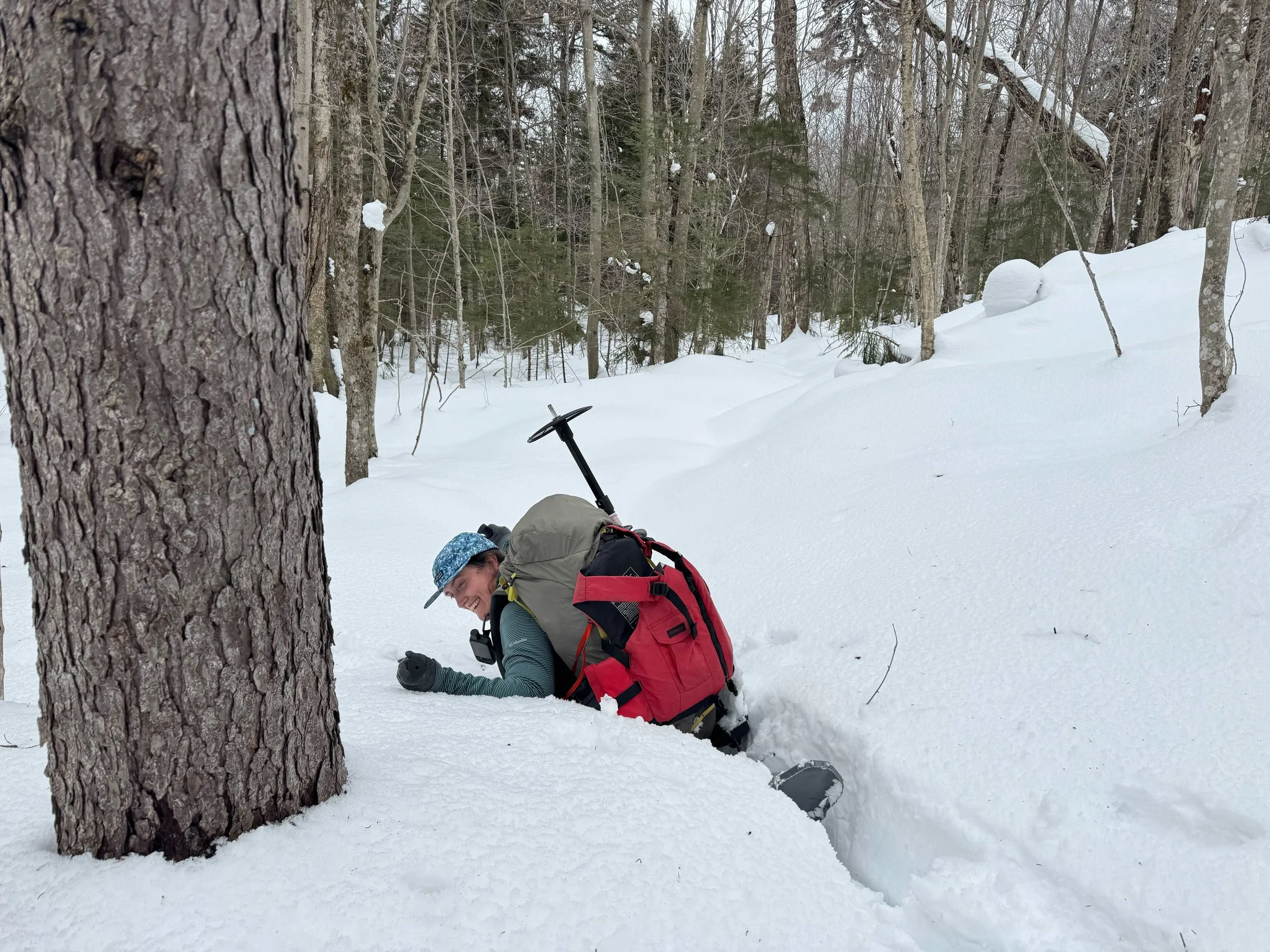
Lija Treibergs bushwhacking to Queer Lake, Pigeon Pond Lake Wilderness, February 2026.
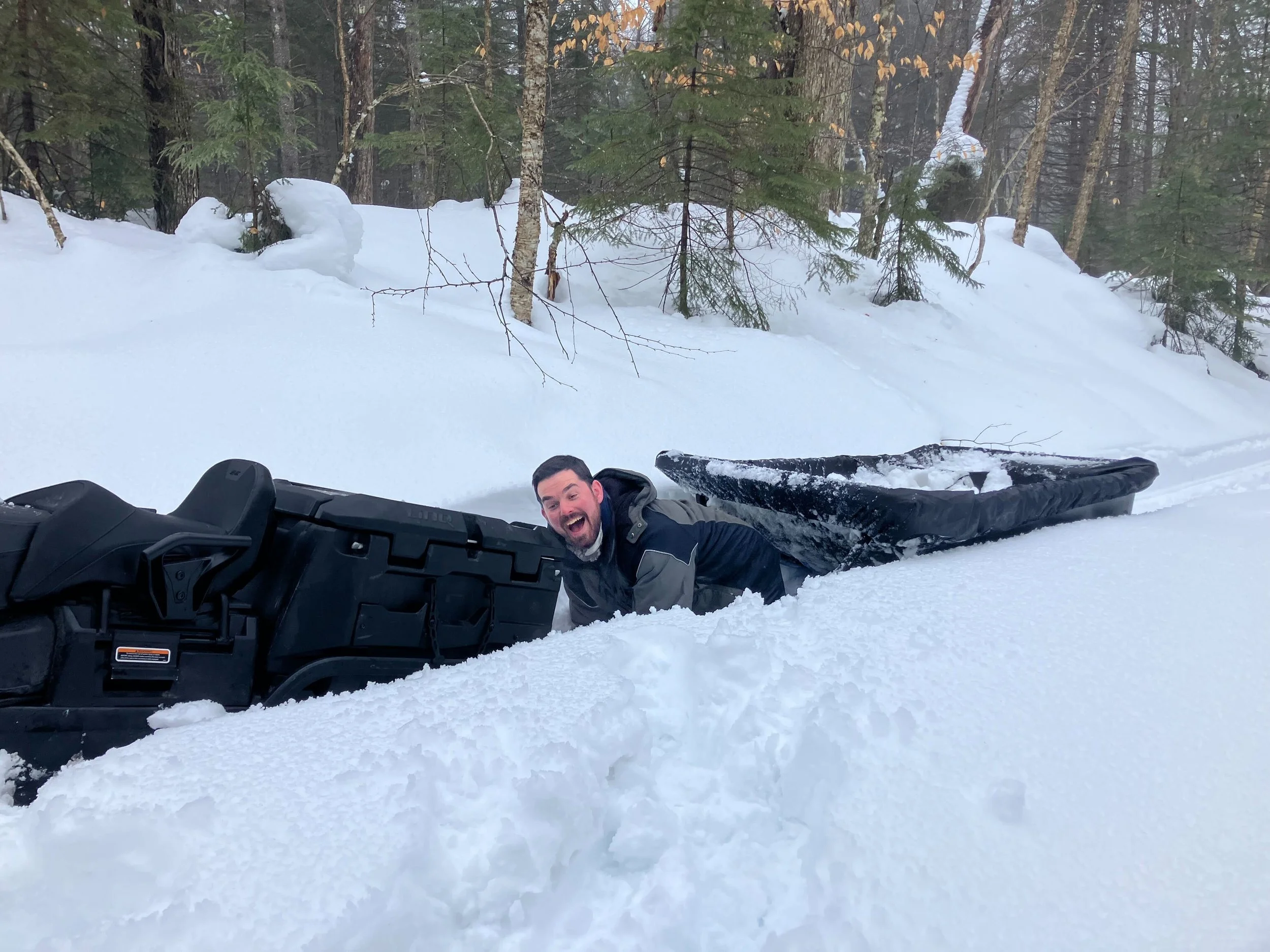
The warmer, leaner winters of 2023 and 2024 stand in stark contrast to the more “typical” Adirondack winters of 2025 and 2026. In 2023, during the trip to Indian and Muskrat Lakes in the Moose River Plains Wild Forest, our field team barely had enough snow cover for the snowmobile and occasionally had to ride over loose gravel. The same trip in 2025 saw such a deep snowpack that the snowmobile routinely got stuck, which meant much time was spent shoveling it out to get going again. In 2023 and 2024, Squash Pond Stream in the Fulton Chain Wild Forest had plenty of flowing water to collect a sample. The last two years, after digging down through four feet of snow in a hole big enough to stand in, the stream contained no water, and collecting a sample proved impossible. Woods Lake, located on private land just south of Stillwater Reservoir, is a staff favorite regardless of the conditions. This eight-mile trip is routinely skied and features what we refer to as the “Woods Lake Ski Hill,” a steep incline that takes about 30 minutes to go up and 30 seconds to come back down.
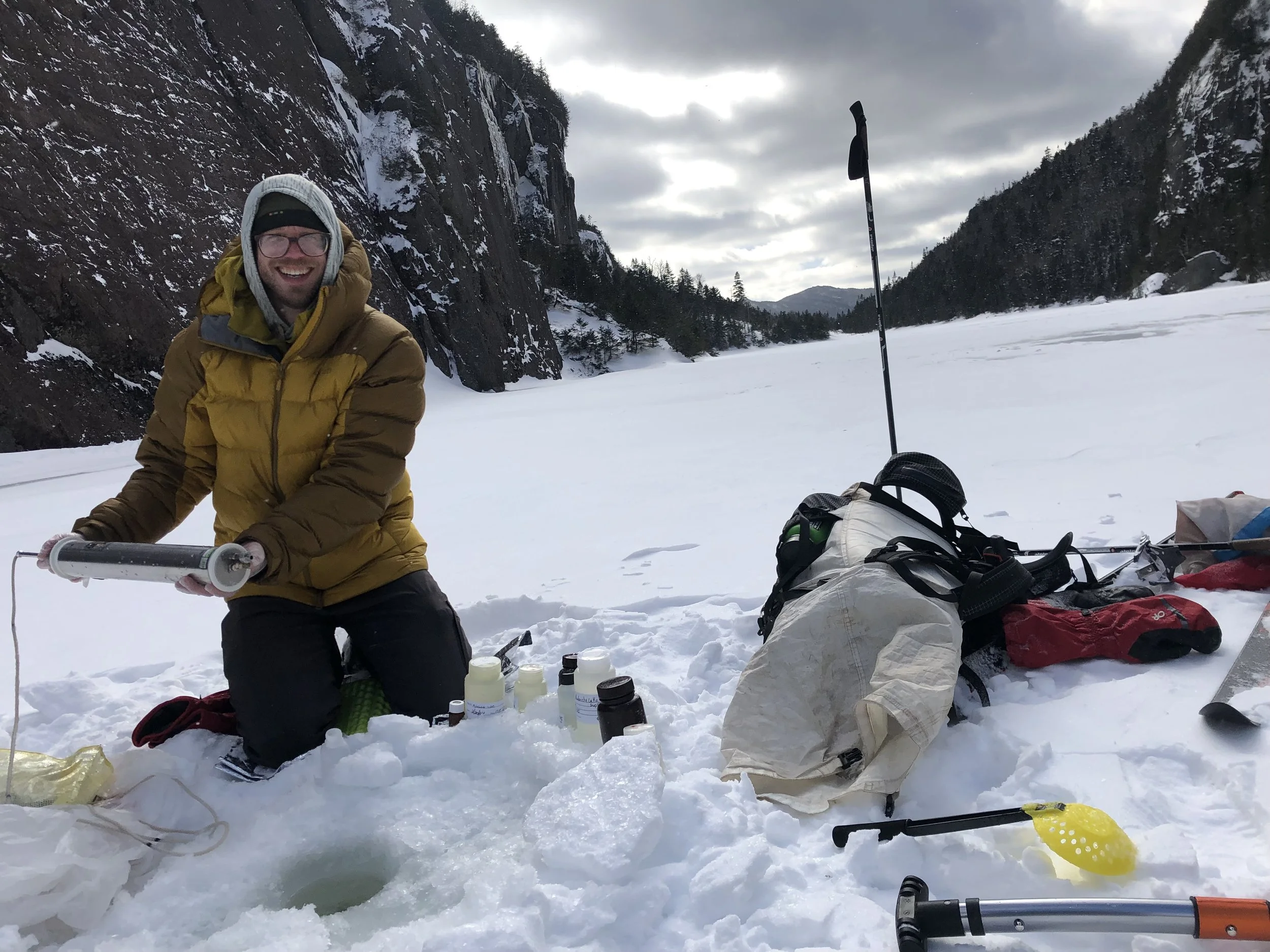
Temperatures and ice thickness also varied greatly across the last four Februarys. After measuring only five inches of poor-quality ice just offshore on Queer Lake in the Pigeon Lake Wilderness in 2024, we decided it was safest to sample there and not venture out any farther. The next year provided over 20 inches of solid ice, allowing us to safely sample at the deep hole. The highest elevation ALTM site, Avalanche Lake, sits 873 meters above sea level in the High Peaks Wilderness. This lake routinely has enough ice to sample from the deep hole in winter, but February 2025 is still our thickest ice measured of any ALTM site at an impressive 32 inches. It was quite the chore just to auger a hole to reach the water to collect our sample, and the 20-mile-per-hour sustained winds encouraged us to work quickly.
Despite the additional hurdles that can be encountered during winter fieldwork, there is something truly magical about being out at that time of year, especially working on the surface of a frozen lake deep in a remote wilderness area. That feeling of wildness seems to resonate more strongly and reminds us why the Adirondacks are so special and the importance of protecting its most precious resources. Even on some of the more difficult days, there is a sense of accomplishment unmatched by fieldwork during open water months. Each step and every drop of water is truly earned. In the face of increasingly variable and uncertain winter conditions, this time spent outdoors during the colder months is especially treasured.
A special thank you to all who participated in ALTM sampling this 2026 winter: Shane Garlock, Paul Casson, Victoria Drumm, and AWI staff: Dr. Chelsea Smith, Mary Glynn, Mike Hansen, Joline Hall, and Brett Wimsatt. Also thank you to NYSERDA for their support and partnership.